
Trade Offs
Pat Noonan made adjustments and, as always, they resulted in trade offs on the field in the search for goals

Once again, FC Cincinnati finds themselves on the losing side of a game where they created more chances than their opponents. For long term stability, that's a good thing as expected goals is one of the most predictive measures of team quality we have. But with the sample size of a single game, the utility of xG is descriptive at best. And on Saturday, xG doesn't tell the full story.
New York was more dangerous with the ball on the night. That's borne out looking at a possession value model, like American Soccer Analysis' Goals Added (G+), which attempts to quantify the game more holistically. It takes into account every action in possession, not just the shot attempts reflected in a traditional xG model. The Orange and Blue had some dangerous opportunities in transition but, for the most part, really ratcheted up the pressure when already trailing. Meanwhile, NYRB applied pretty consistent pressure to FCC, and even though they didn't create a ton of great shots, the game state broke their way.
g+ GameFlow: MLS Regular Season New York Red Bulls v FC Cincinnati on April 04, 2026. #NYRBvCIN ⚽️🤖
— g+ GameFlow (@gameflow.bsky.social) 2026-04-05T02:26:20.151240Z
Julian Hall's opening goal for the Red Bulls was about as clear of a chance as you'll see in the run of the play. But NYRB's next two goals, a free kick from Emil Forsberg, and an own goal coming off Kyle Smith, were far less clear cut. Still, the Orange and Blue were chasing pretty much the whole game. Even if they generated more xG on the night, the game, which was already pretty wide open from the start, became more stretched.
Some very real changes on the field Saturday night in Harrison contributed to that up and down the field style. FCC Manager Pat Noonan went with a four player defensive line, with Kyle Smith starting at right back and Ender Echenique pushed forward. Noonan said the decision was, "a combination of personnel, performances and how we thought we could attack New York tonight." And there seemed to be tangible benefits from the change, especially when it came to creating scoring opportunities. But it came with defensive trade offs.
The Good
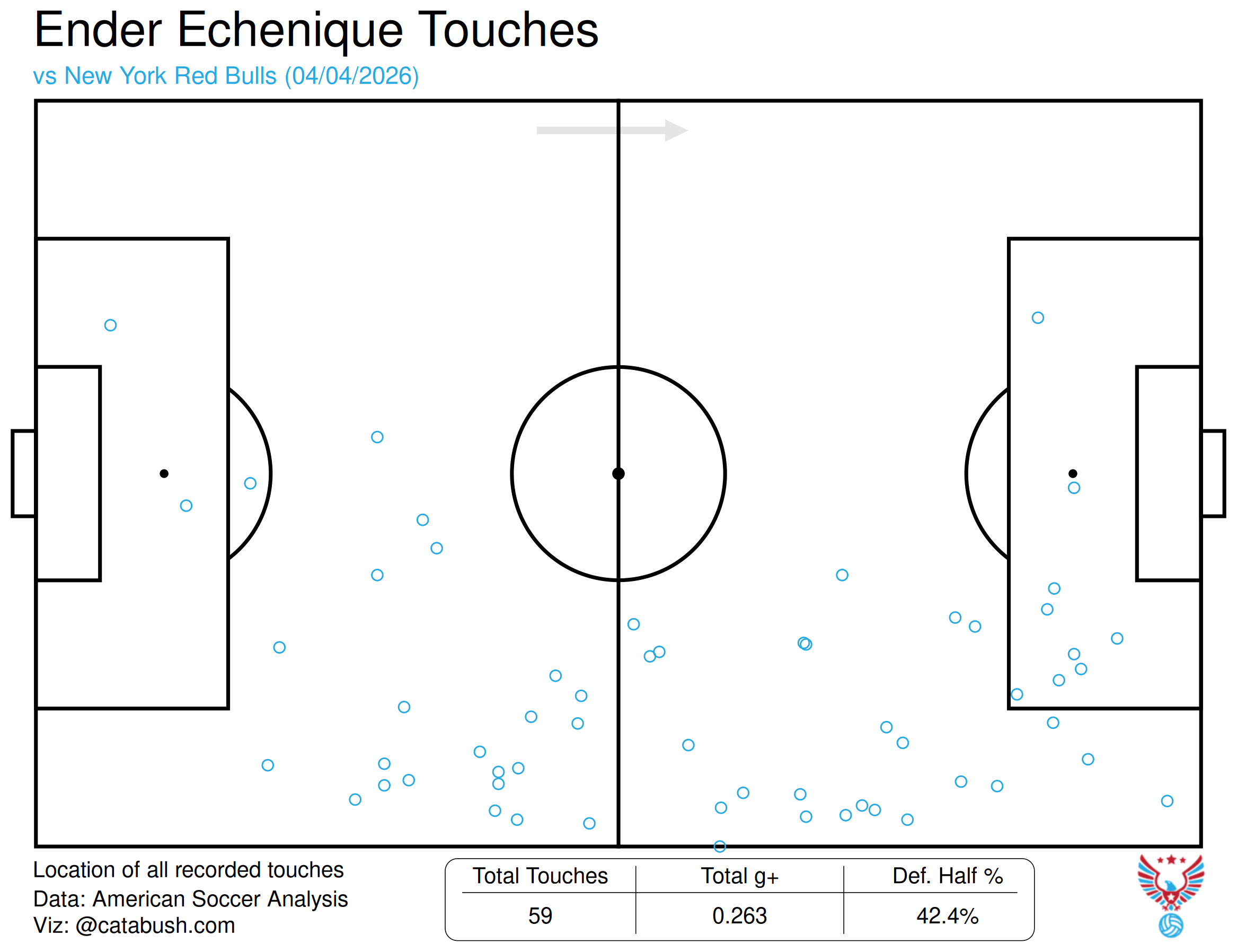
Let's start with the promising stuff. Simply, FCC's setup prioritized getting it's best attacking players the ball in the most dangerous parts of the field. Echenique, freed of more defensive responsibilities, started closer to the Red Bulls' goal following turnovers. He was consistently dangerous and often had space to exploit as NYRB pushed attacking numbers forward.
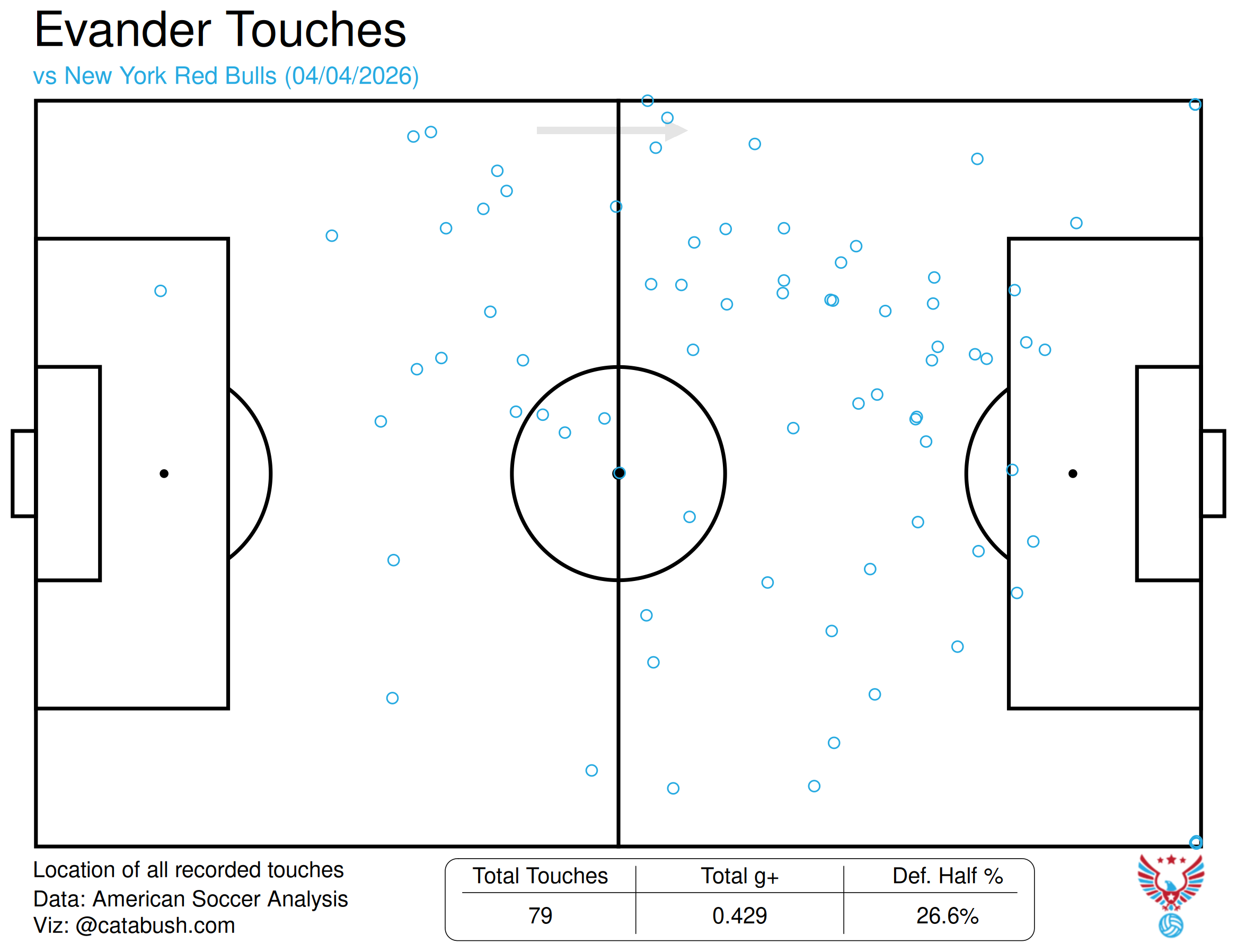
Evander operated essentially as a striker alongside Kévin Denkey up top in FCC's 4-4-2 shape. That positioning allowed him to be available early in transition, pushing the ball forward himself on the counterattack or to receive the ball in a less congested final third than if the Orange and Blue had progressed more slowly up the field.
Being ready to counter with (at least) three runners meant the Orange and Blue had a lot. If the team is a little bit more on the same page on some of those opportunities, we're having a different conversation today. However, some passes were hit just a little too hard or not hard enough or a defender made a tackle he absolutely needed to or a shot went just wide and FCC had little to show for its open play possession at the end of the game.
Defensive Compromises
However, setting up to get Evander and Denkey more touches in transition came with a pretty big trade off.
When NYRB had the ball, FCC set up in a very narrow 4-4-2 defensive shape with Denkey and Evander as the furthest two Orange and Blue players forward. And they didn't really do a whole lot when FCC didn't have the ball. Whether that was a specific tactical choice or not - and generally when players continue to do the same thing over and over again, it often is - the Orange and Blue traded pressure in the midfield for the chance to counter with even numbers.
As Matt Doyle pointed out in the moment, the lack of pressure on the ball from Evander and Denkey compromised the Orange and Blue's defensive shape, starting a series of cascading events that resulted in Julian Hall's tap-in to open the goal scoring on the night.
Cincy *can not* make it that easy to just carry the ball past their front line. It immediately compromises the shape of the midfield and defense behind them.
— Matthew Doyle (@mattdoyle.bsky.social) 2026-04-04T23:59:41.459Z
That lack of defensive pressure from the front wasn't the only issue in the sequence. Bryan Ramírez couldn't track Cade Cowell before the latter blew by Nick Hagglund who just couldn't keep up with the winger. Matt Miazga couldn't track Hall who got into a perfect spot in the box to receive the ball from Cowell pass and score.
After the game, Noonan said, "It's not just the back line. I think the first goal, how they break our first line of pressure, it still comes down to being harder to break down in that moment, and we need to do better job there from how we start our pressure to how we finish the play, and so it's not just the back line. Our front two, three, whatever the group is, the midfield group, we can do better to prevent how they get into our box. And so that's a collective."
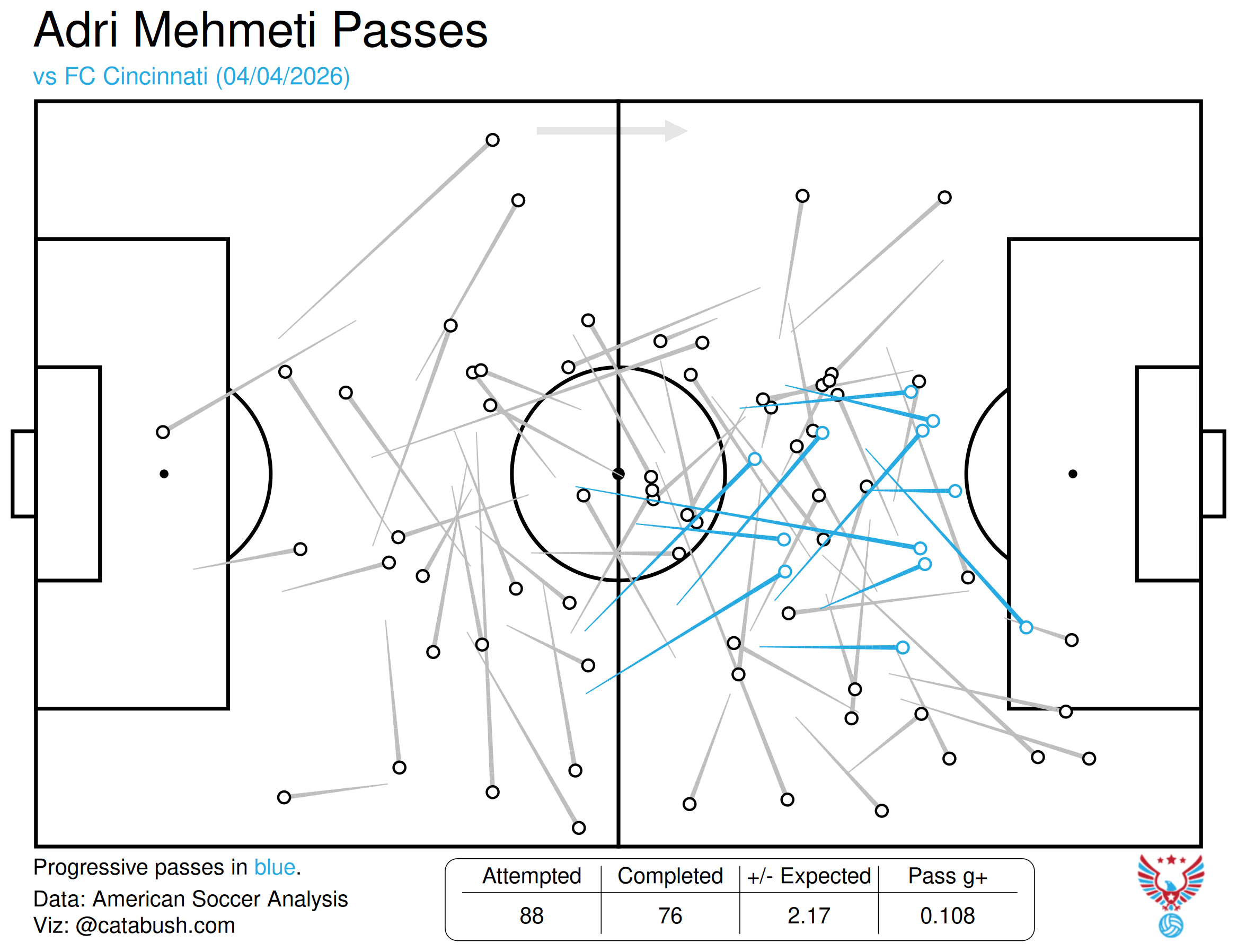
In providing a constant countering threat, Denkey and Evander allowed the Red Bulls to nearly always have a +1 advantage in midfield when NYRB was in the final third, too. Ronald Donkor, Emil Forsberg, and Adri Mehmeti consistently outnumbered Pavel Bucha and Samuel Gidi. Mehmeti, frequently the deepest lying player in the Red Bulls' midfield triangle, was able to dictate play in FCC's attacking third because he had so much time, and space, to find and play the ball.
FCC seems to have hoped that they'd be able to snatch a goal or two on the counter while its compact, narrow structure frustrated the Red Bulls in the final third. And it kinda worked. The Orange and Blue had chances on the break but couldn't cash in while NYRB was largely stymied (at least in terms of shots) but scored in transition and then in a couple other one-off ways.
Looking Forward
We'll see if this was a one-off due driven by availability or not, as Miles Robinson was unavailable serving a red card suspension and Teenage Hadebe was just back from a long return trip from international duty. If it is a sign of things to come, FC Cincinnati's current roster build limits the options Noonan has available to make changes.
Tom Barlow put in a shift as a left midfielder but he was pretty clearly playing out of position. Can Dado Valenzuela be an answer on the left side of the field moving forward? Even if he can be, the depth chart behind him and Echenique thins out very quickly.
One last thing: this game plan isn't going to work against every team in MLS. It nearly did against the Red Bulls because Michael Bradley pushes numbers forward but other opponents will likely be less willing to leave its center backs on similar islands.
Noonan deserves some credit for looking for a solution to what's been ailing FCC. There are worse places to start than with a system that puts Echenique, Evander, and Denkey in positions to succeed. However, those changes come with sacrifices, especially defensively. It'll be up to Noonan and the team to find the right balance.


