
Pressure
FC Cincinnati's struggles against Columbus' pressure and why the team maybe needs to move on from the Pavel Bucha as wing back experiment

Major League Soccer is back after the World Cup and that means the highs, and lows, possible from a two game week are too.
Things started out great. FC Cincinnati returned to action last Wednesday, knocking off the best team in the league, the Vancouver Whitecaps, 4-3, in a game featuring ruthless Orange and Blue counterattacks and a defense that did enough to limit a very potent attack. Saturday in Columbus didn't go that way. A promising start courtesy of an early Kévin Denkey goal disappeared as the Crew stifled FCC, en route to a 2-1 victory for the hosts in the first edition of Hell is Real in 2026.
It's too soon to say if the Orange and Blue are or will be a different team following the break, especially with the transfer window still open. However, something that jumped out to me over the course of the first two games back is pressure. I'm not talking about any extra emotional weight related to the rivalry, either.
In both games, the Orange and Blue's defensive shape had to absorb enormous amounts of opposing pressure. On Wednesday against the 'Caps, the team found the outlets to punish it going the other way, but on Saturday, they struggled to break out. This has been a recurring theme across the season, and to a certain extent during Pat Noonan and Chris Albright's tenure.
However, what started as a look at how FCC dealt with pressure (or didn't) recently became something else.
Hemmed In
FCC as a team struggled to move the ball up the field in Columbus on Saturday night. Where there were seams to be found against Vancouver's more aggressive press, Columbus' mid block flummoxed the Orange and Blue. That isn't to say that the Crew's higher press and repress wasn't effective - it was - but the Crew could sit deeper and allow FCC to attempt to play through narrow windows, because more often than not, the Orange and Blue just couldn't do it.
The Crew set up to and succeeded in denying central space to FCC, forcing the Orange and Blue to attempt to progress the ball through even tighter spaces with an added defender in the form of the sideline. Yes, there are passing triangles, but they're siloed off from each other. FCC has been at its most dangerous immediately following switches to weak side wing backs, but there are really only a few players who can hit those passes consistently on the field.
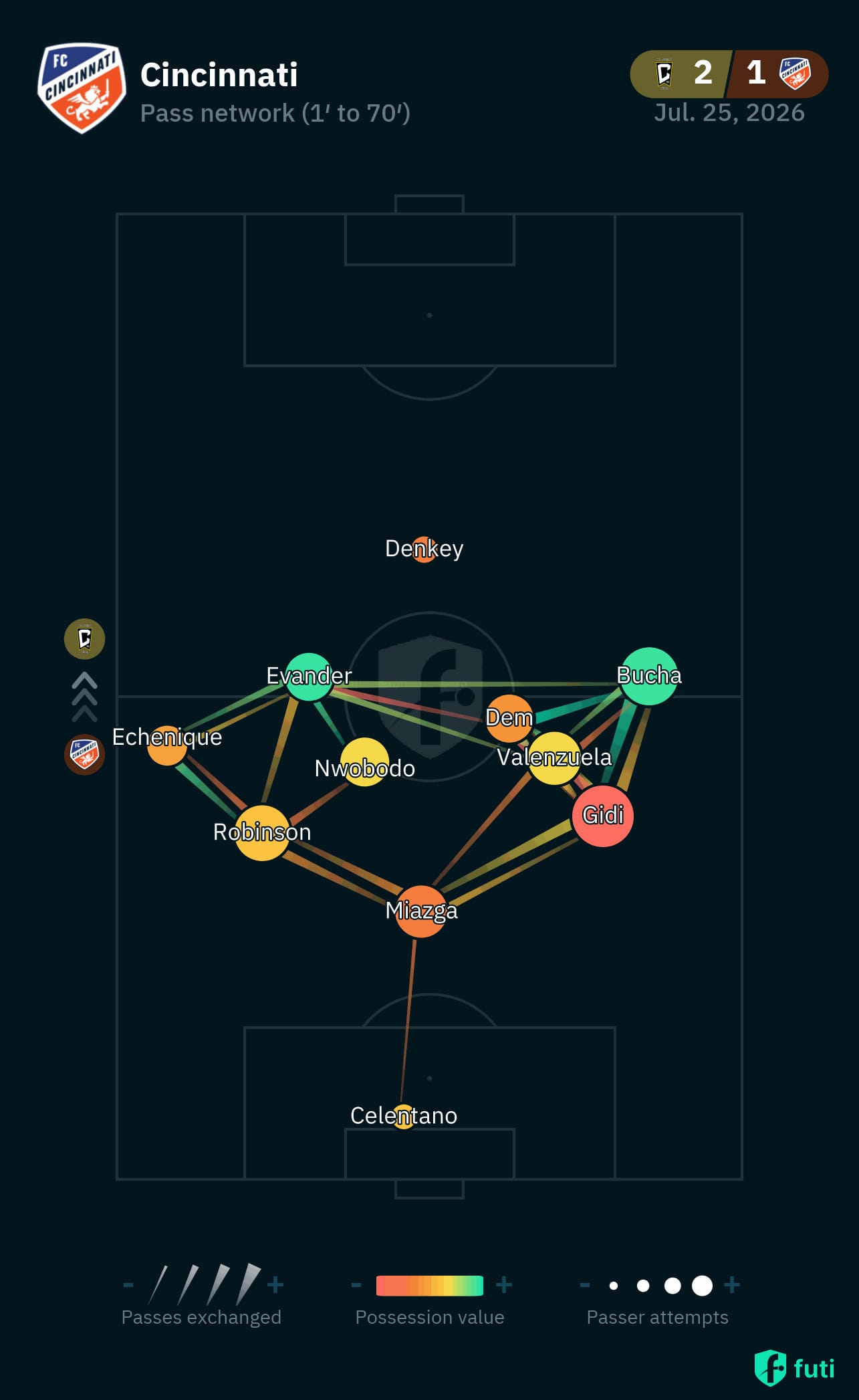
A contributing factor to this issue is the team's central midfielders. Dado Valenzuela has shown an ability to play in tight spaces, but he's never been much of a forward passer. The second part is also true for Obi Nwobodo, too, but not the first. That means even in situations where FCC's midfielders received passes in the middle of the field, they were rarely able to play a pass through another line of pressure to put a teammate in a position to attack Columbus' defense.
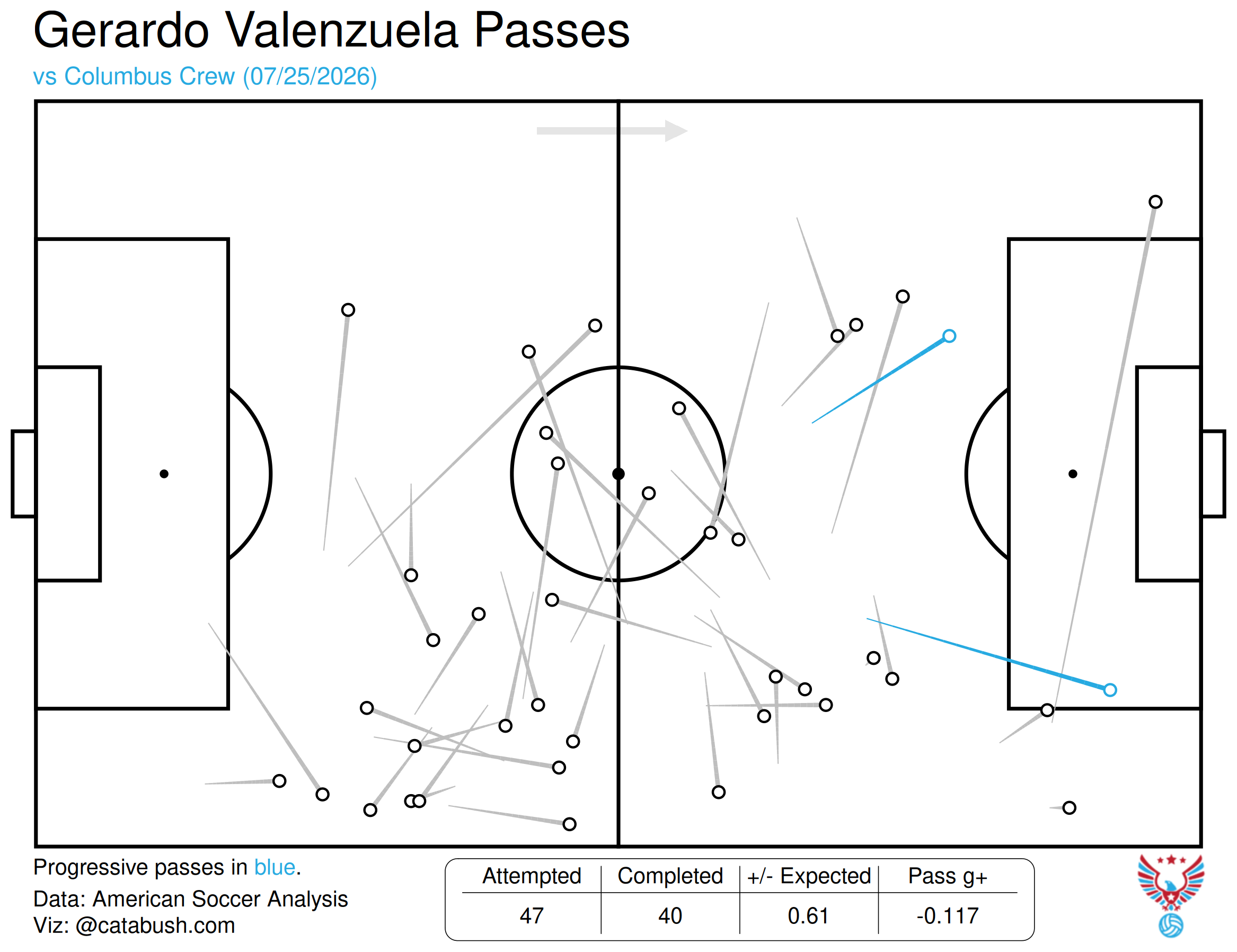
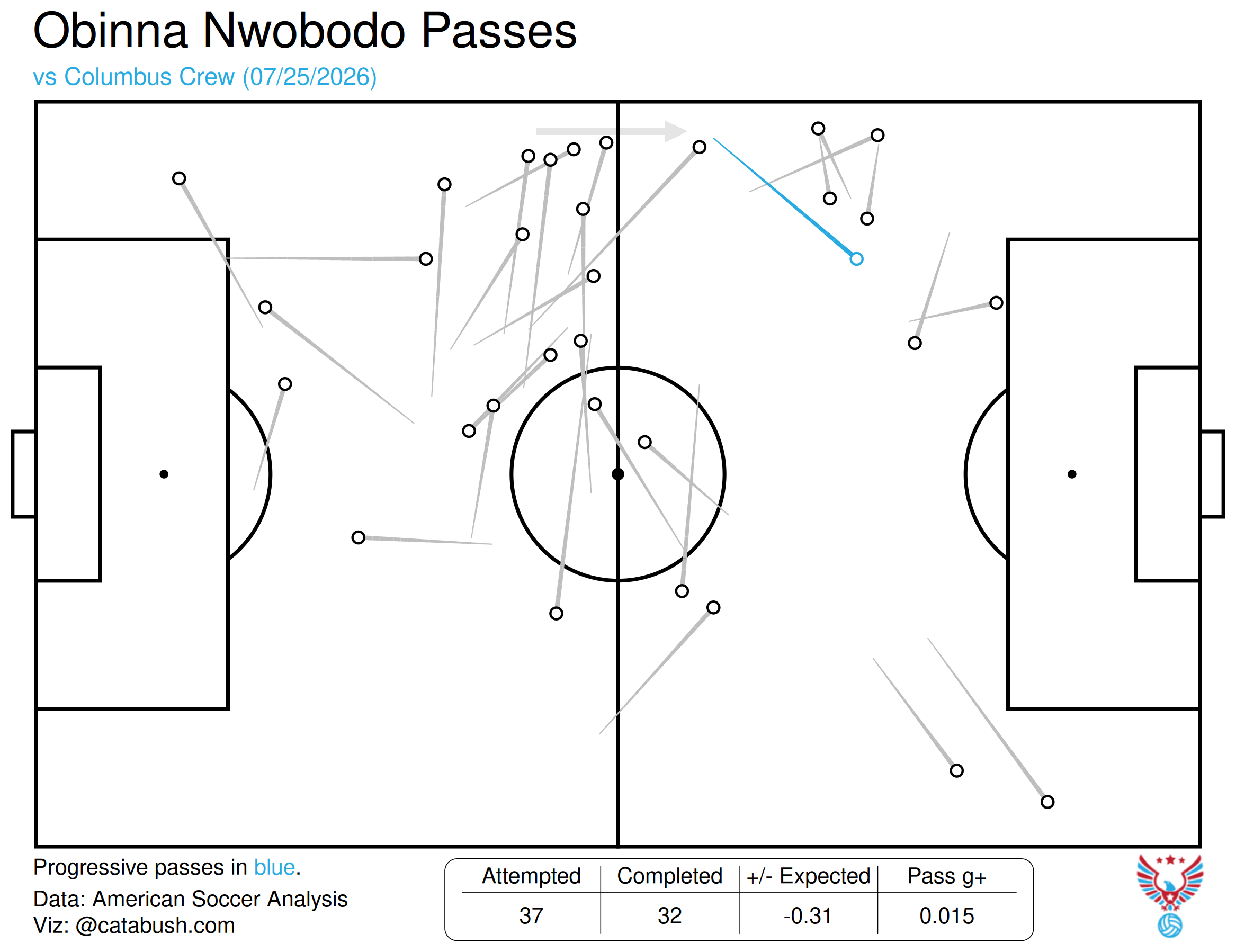
FCC's center backs have the ability to break lines, skipping the midfield and playing directly to Kévin Denkey or Kenji Mboma-Dem. When that approach works, it really works, but it's not a very high probability pass, usually resulting in a turnover and the Orange and Blue having to win the ball back again.
Part of the appeal of this lineup, at least to my eye, is that it should be just about the best passing unit the team can put on the field at once. Pavel Bucha playing out of his natural position as a right wing back, and Samuel Gidi's continued presence as a central defender, in theory, should give FCC the weapons to break through opposing pressure. It didn't happen on Saturday, and, when you look at the experiment as a whole across the season, the signs are less than promising.
Shifts
Bucha has been playing wing back for long than I'd thought. He made his debut there on April 25 against the Red Bulls. In the eight games he's played there, the Orange and Blue have a 4W-2D-2L record - pretty solid, right? The underlying numbers tell a slightly different story, even with a less than ideal sample size.
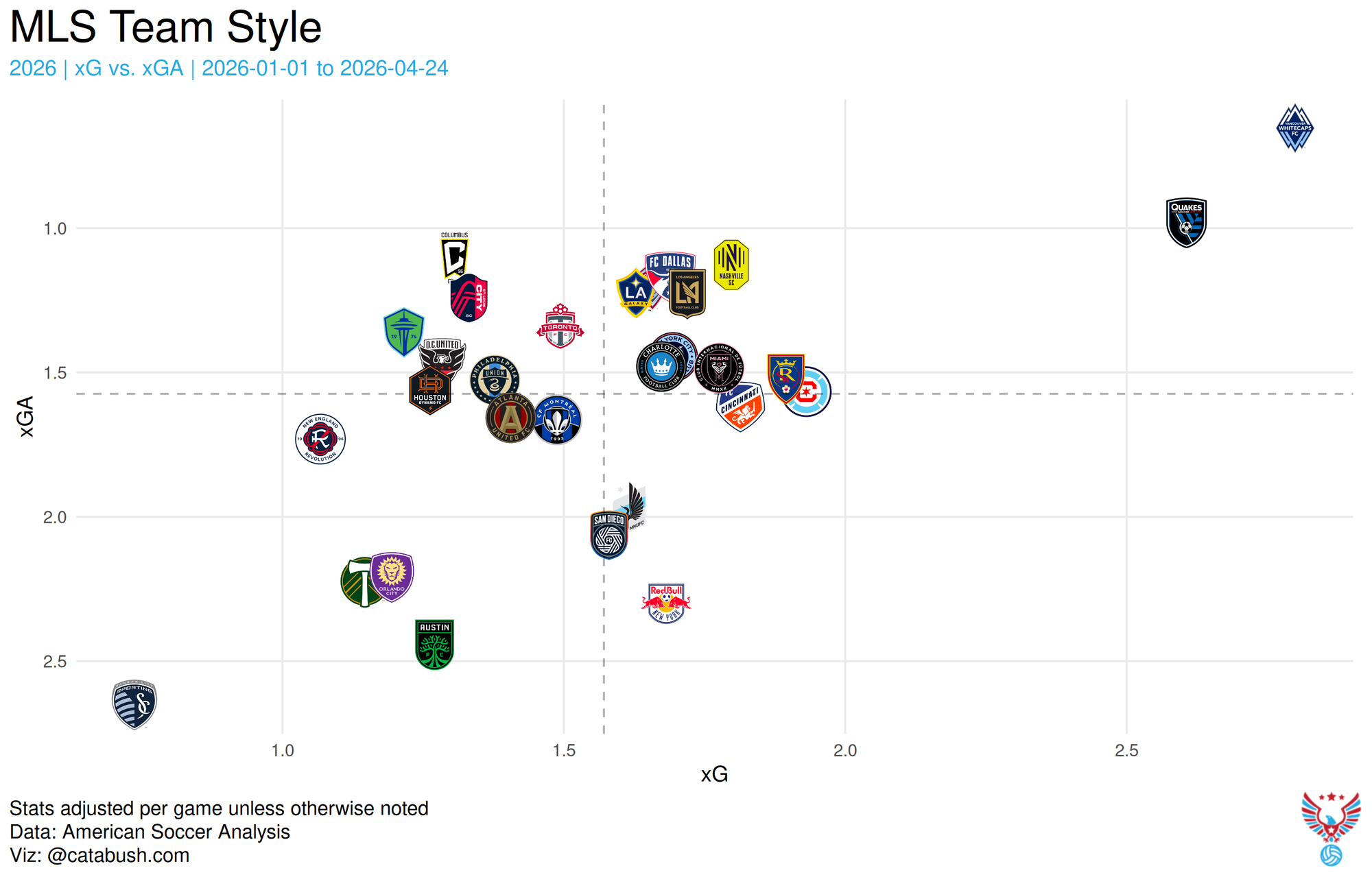
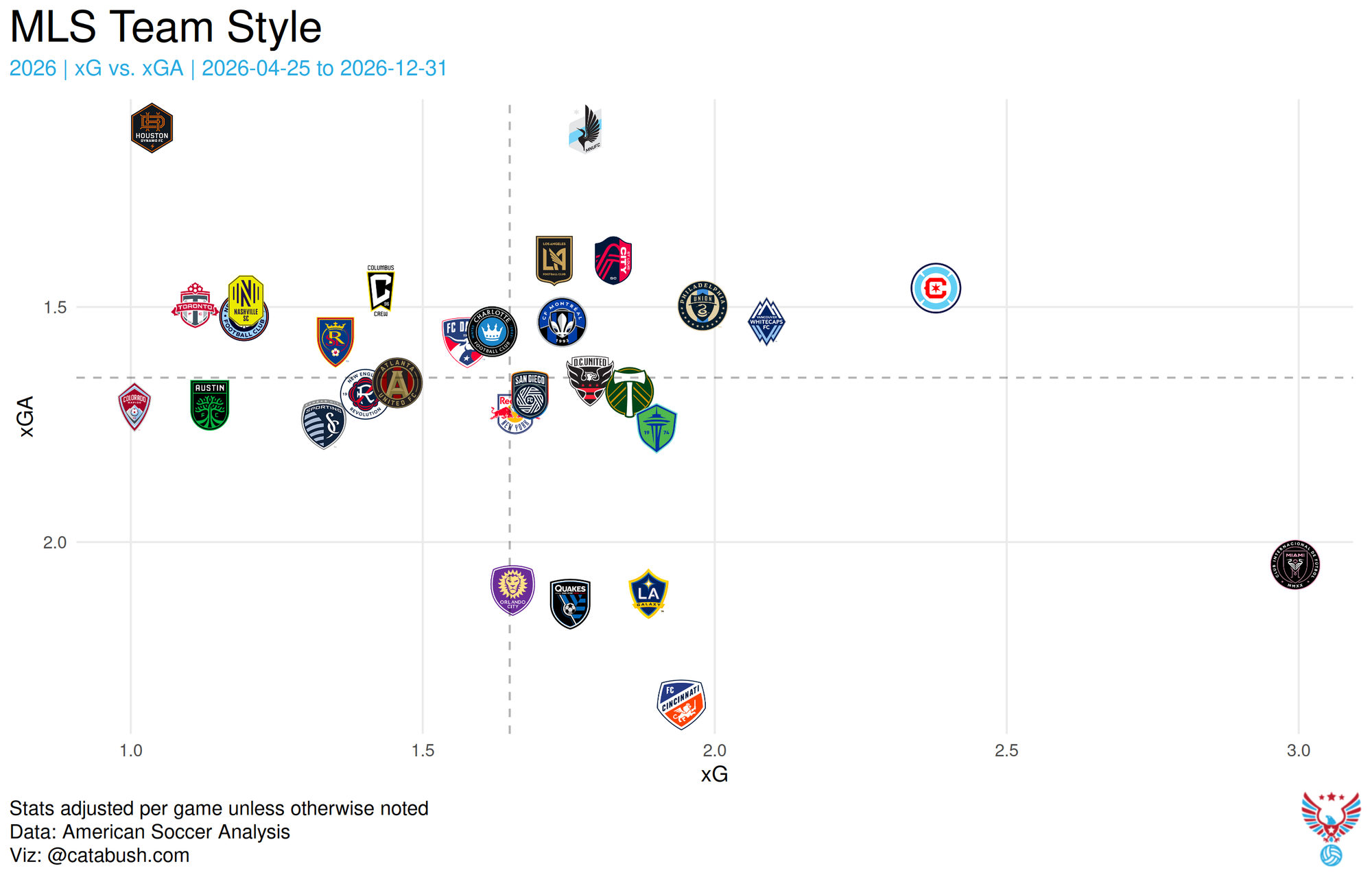
FCC's xG and XGA before (L) and after (R) Bucha's move to right wing back
FCC's attack has remained in the top five the league, even creating a little bit more danger per game after Bucha's repositioning. However, the defense has gone from slightly below average to the worst in the league.
After the move, FCC has played less direct and opponents are dominating the battle in the final third. For those unfamiliar, field tilt counts all passes that take place in the final third of the field and divides by each team's contribution. So since late April, FCC has played just about 30% of final third passes in its games. That's a lot of pressure to be under each game and a lot to ask of your defenders, especially when two of them are central midfielders playing out of position.
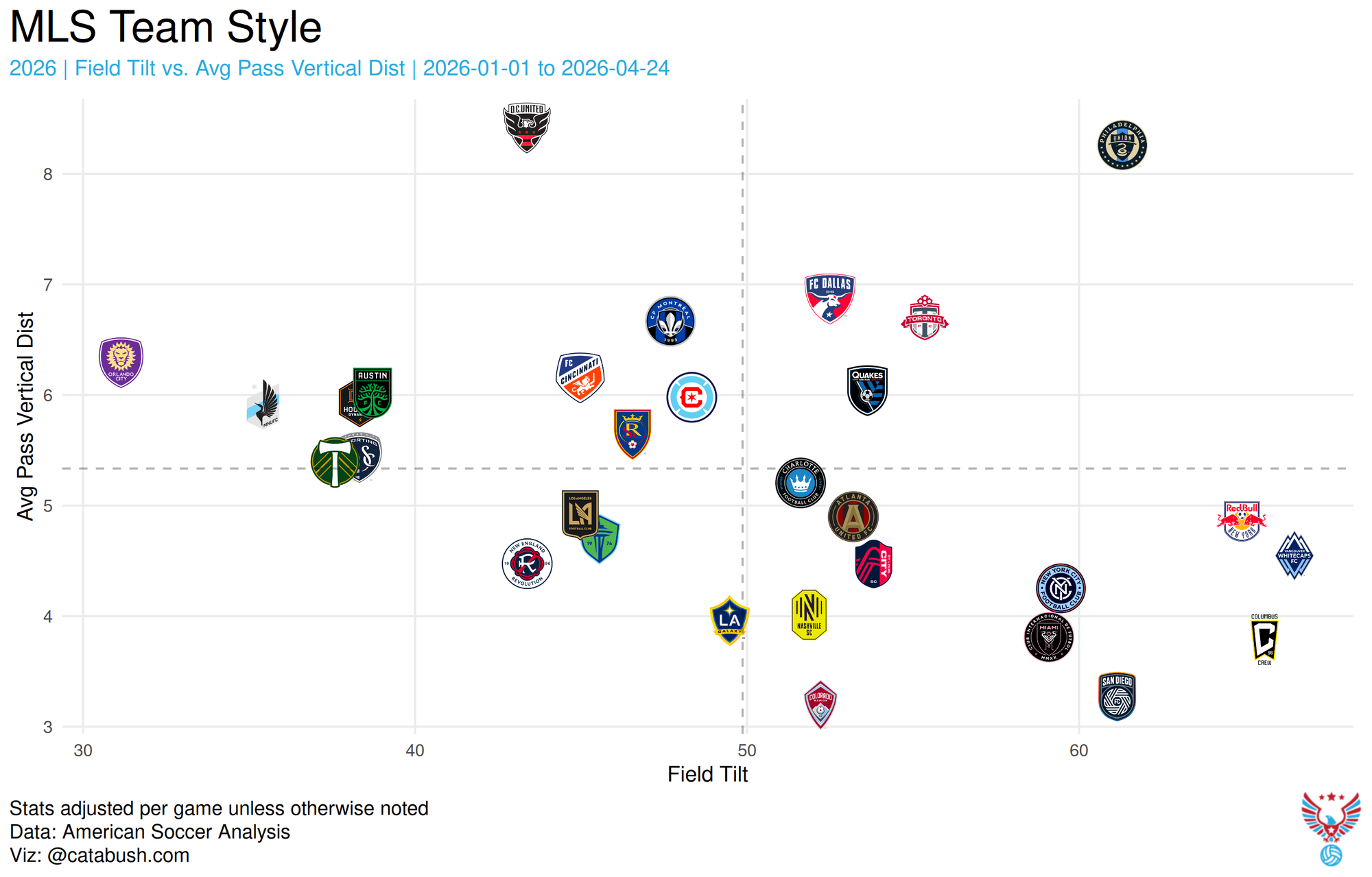
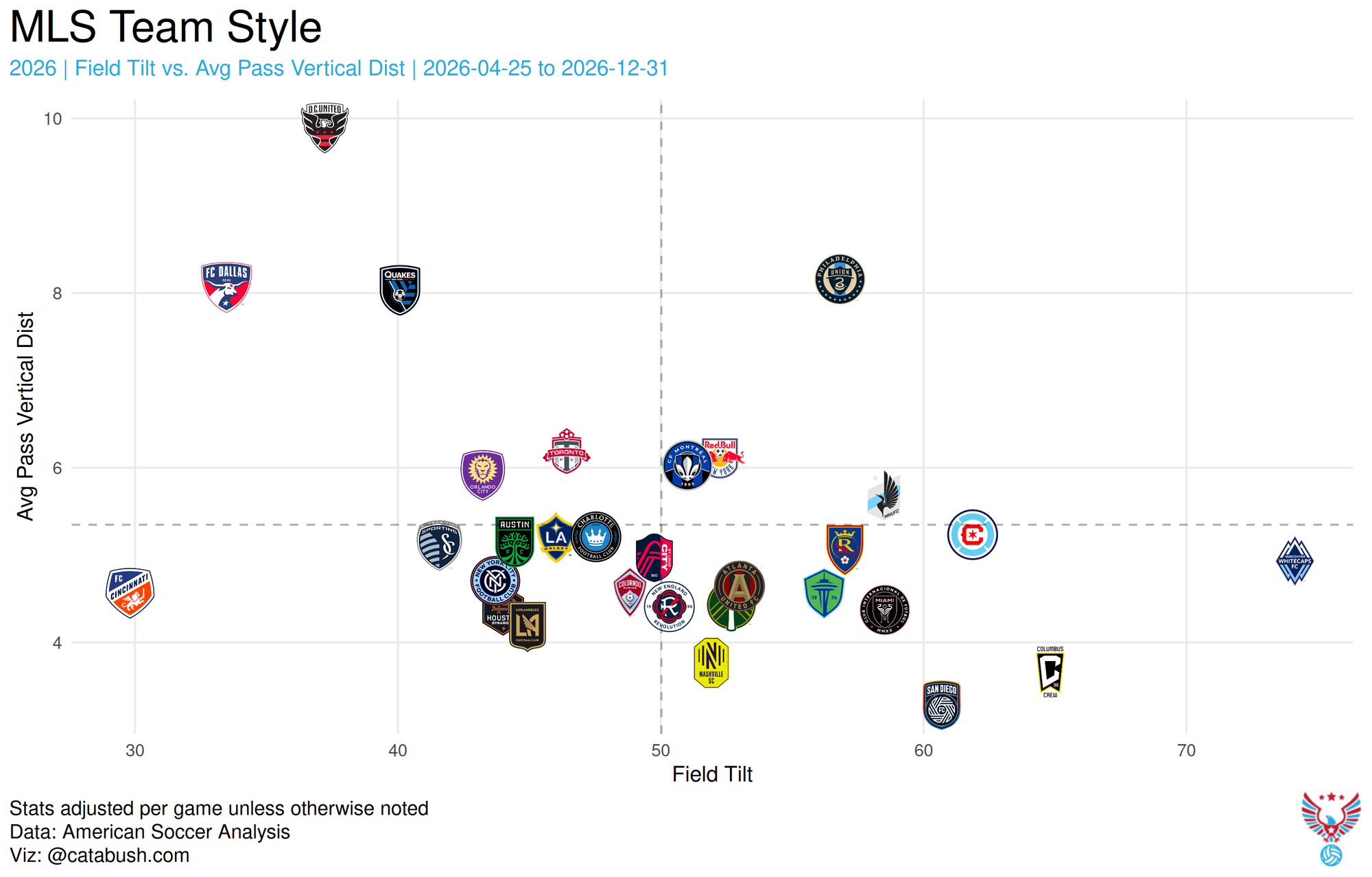
Before (L) and After (R) Pavel Bucha's move to right wing back
At the same time, FCC has played less direct. During a possession that looks like horizontal passes along the backline, looking to drag opponents out of position before playing forward or just slowly working the ball up the field. However, that slow possession hasn't resulted in more possession in opposing final thirds, suggesting the ball isn't getting very far up the field, meaning opposing teams need to cover even less distance before putting the Orange and Blue under pressure again.
We've seen the goal scoring continue, but with team less control of the ball, FCC has invited more pressure and allowed opponents more scoring opportunities. It might be time to re-embrace a more direct approach, living with the higher variance of playing long because playing slower hasn't been led to more dangerous possession.


