
Monday Takeaways (3/3/25)
Focusing on FC Cincinnati's woes against Philadelphia, Evander's involvement, and a quick turnaround this week

All data courtesy of FBref unless otherwise noted

We’re two more games into FC Cincinnati’s 2025 campaign and this week’s results were decidedly more mixed than week one’s. Wednesday’s 1-1 draw against Motagua ensured a two-match date with Tigres in the next round of the CONCACAF Champions Cup but Saturday’s 4-1 loss on the road to the Philadelphia Union will get most of the attention in this edition.
No need to panic though - we’re just 1/17th through the Major League Soccer season, after all. So take a deep breath, steel yourself to relive a rough game, and let’s get into it.
1. A Tough Night
Saying it wasn’t a great day for FC Cincinnati on the shores of the Delaware River on Saturday is almost certainly underselling it. The Orange and Blue were thoroughly outplayed by the Philadelphia Union.
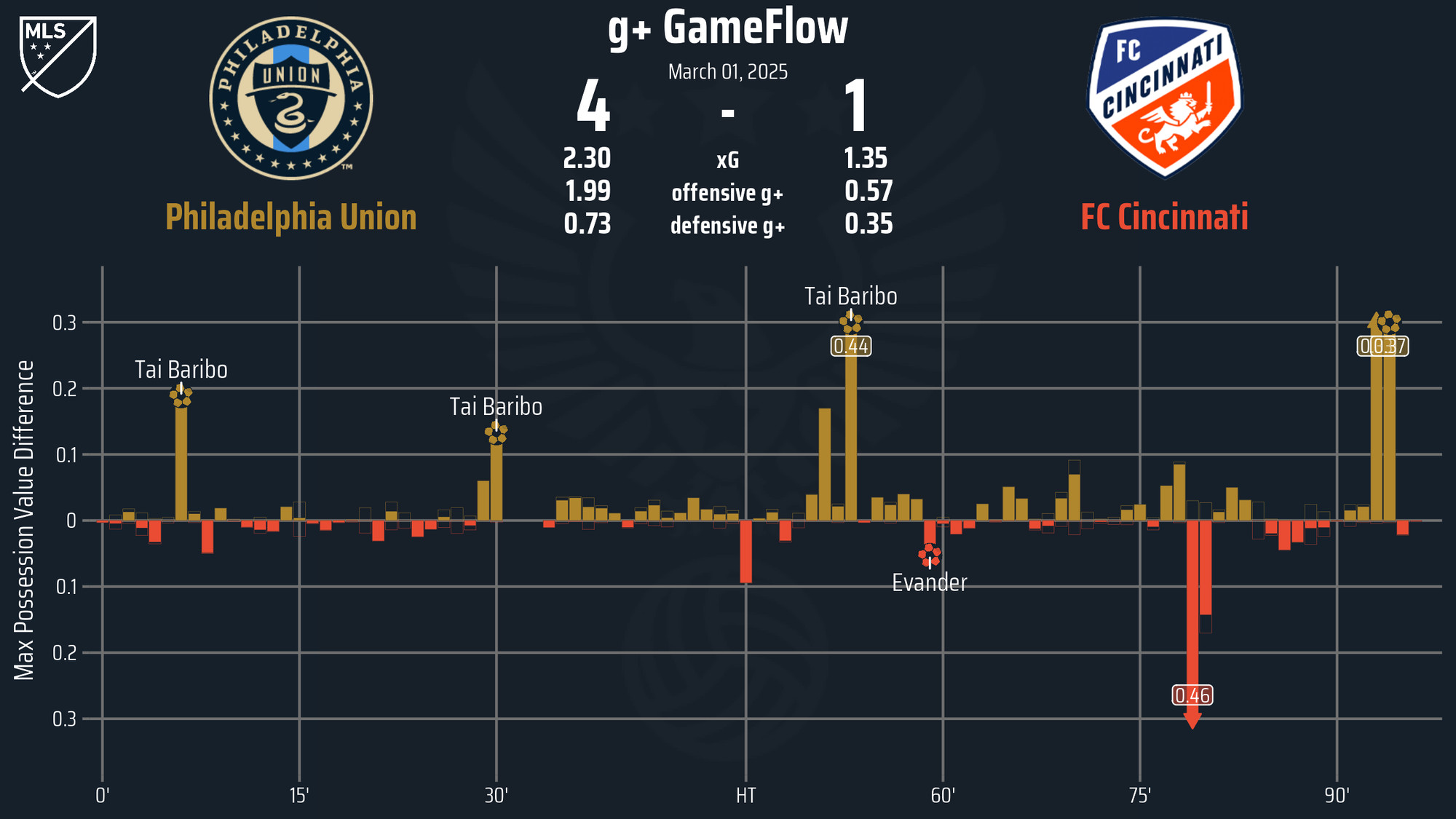
How the Union took advantage of a Pavel Bucha-less (at least to start) FCC is something that bears watching going forward.
Put as simply as possible, the Orange and Blue just couldn’t consistently move the ball up the field. FCC completed just 21 passes into the final third on Saturday compared to 47 by the Union. Philadelphia ended the night with nearly 100 more touches in the attacking third than the Orange and Blue (183 to 92). It’s hard to win a soccer game when you don’t have it in positions to threaten your opponent’s goal.
The Union’s (highly successful) defensive game plan for much of the night seemed to consist of a few key things:
- Clog the middle of the field when Miles Robinson had the ball in the center of FCC’s back three.
- If Robinson passed sideways to another centerback, press them towards the sideline, forcing a low percentage pass forward, either on the ground or in the air.
- Cover FCC’s midfield pairing and force them to receive a pass and play it in tight spaces under pressure.
In the first three games of the season, Robinson has had success hitting line breaking passes to FCC’s forward line, bypassing the midfield, and unleashing the team’s wingbacks who have been sitting higher. Against the Union however, Robinson couldn’t find those lanes. He had to look for longer passes, without much success. Blame the wind or miscommunication or decision making - it doesn’t really matter. FCC was whistled for offsides six times on Saturday and a number of those seemed to be the result of players on the forward line just not being on the same page timing-wise with whoever was looking to play a direct pass.
The Orange and Blue’s starting midfield duo didn’t help much, either. In breaking down what Brian Anunga might bring to FCC, I noted his similarities to Obinna Nwobodo both defensively and in possession. The Union forced the duo to operate in tight spaces in the middle of the field, with Philadelphia’s forward and midfield lines ready to pressure the ball immediately.
Neither Nwobodo nor Anunga looked comfortable in those situations. According to Fbref1, the pair combined to complete just five progressive passes - with Anunga contributing just one in his nearly hour on the field. Without consistent options in the midfield, FCC’s ball progression stagnated.
2. Evander’s Involvement
Even when Evander tried to drop deeper to provide another option on the midfield line, FCC struggled to move the ball quickly enough to find an open player.
In the post-match press conference, when asked about getting the ball to Evander, Pat Noonan said, “We just struggled with how we advance the ball off the field. You know, he got touches in ways where maybe it wasn’t impactful, but I think we struggled to get the ball to our attacking group. And you know that, I think, eliminated some of his chances to get on the ball in better spots to have a better impact on the game.”
Noonan’s comments are reflected in Evander’s touch map. FCC’s new #10 operates in a different way that Lucho Acosta did. Whereas Acosta would drop as deep as was needed to find the ball, Evander has maintained his position up the field more consistently.
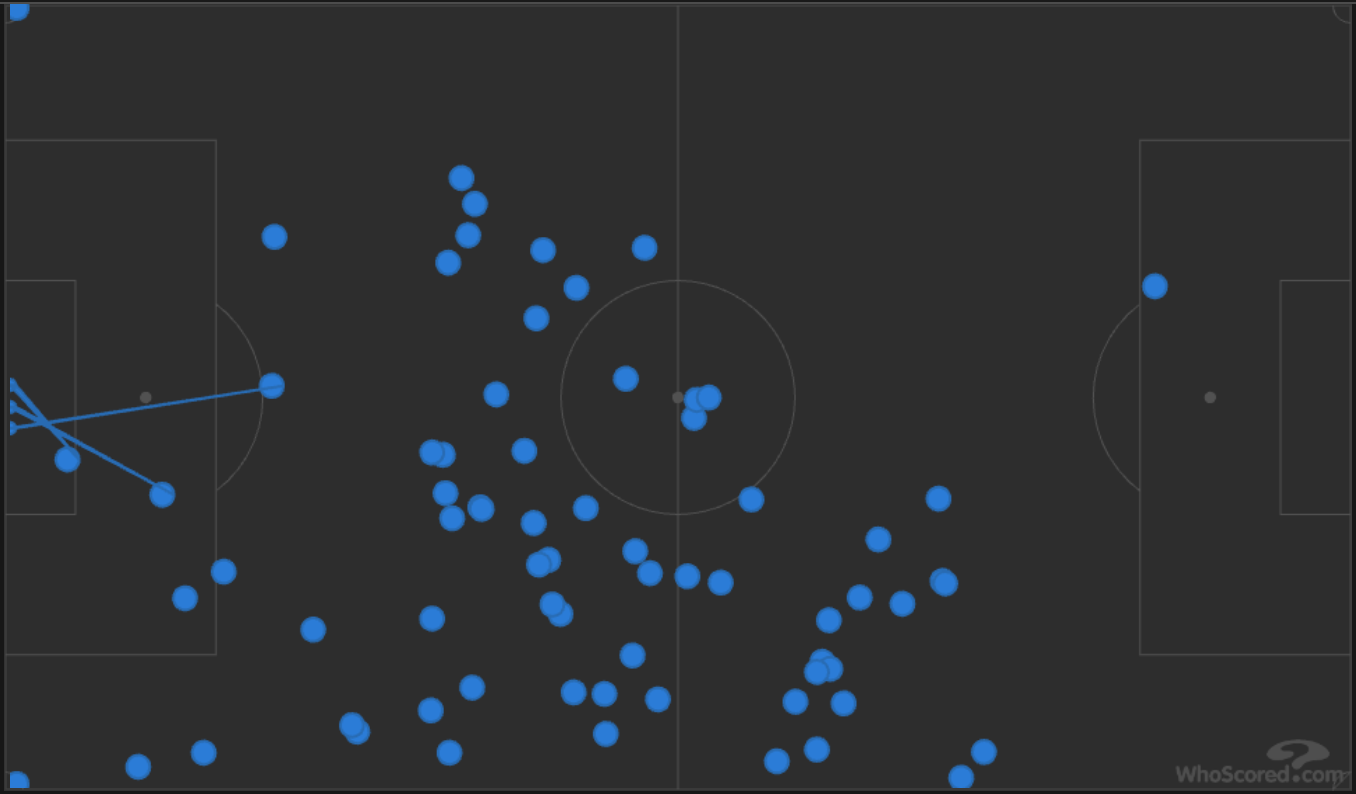
However, with no one able to break lines (or break Philly’s pressure with one or two touches in midfield), Evander had to go looking for the ball. FCC will be at its best when he is receiving the ball in the final third, not being the one tasked with moving it there.
Even with limited service, Evander impacted the game. His second half goal threw FCC a lifeline in the game and he nearly had an assist to Corey Baird in the 79th minute in one of the team’s few forays into the Union’s penalty area.
How Evander continues to settle into the Orange and Blue’s starting eleven will be a major storyline to watch over the coming weeks. A hopefully soon-to-be fully healthy Luca Orellano should help to unlock Evander as well as more minutes with his new teammates.
3. An Early Test
We won’t have to wait very long to see how FCC bounces back from Saturday’s disappointing result. Tigres, currently occupying third place in Liga MX, will come to the West End on Tuesday with a new coach following Veljko Paunović’s sudden departure.
How the Orange and Blue match up against a very good Liga MX side should provide a good barometer for where the team is now. Philadelphia presented a very specific kind of test on Saturday - one that obviously did not go very well. Two games against Tigres in two weeks will be a different kind of test but a no less valuable one.
Seeing how the 2025 iteration of the Orange and Blue continue to adjust will be fascinating to watch and, judging by what we saw last week, there’s still plenty of work to do.
and its more generous definition of progressive pass ↩


