
Making Sense of a Puzzling Team
Over performance and the sustainability of Evander's long distance shots

All stats courtesy of Fbref unless otherwise noted.
With just seven regular season games left, FC Cincinnati remains in contention for the Supporters’ Shield and the number one seed in the Eastern Conference despite continuing to put up lackluster advanced numbers.
Through 27 matches, FCC’s expected goals difference sits at -5.31 according to American Soccer Analysis, by far the worst in the Chris Albright-Pat Noonan in charge. Though ASA and FBref’s models disagree about whether the Orange and Blue’s goal scoring or goal prevention is running hotter, both agree that FCC’s offense is scoring more goals while its defense is conceding fewer goals than expected.1
Skeptics of expected goals might use this over performance to vindicate their doubts about the metric or to argue the Orange and Blue are somehow simply built different.
I remain unconvinced.
Regardless of the model, some of the defensive explanation is pretty straightforward. Roman Celentano’s shot stopping has prevented about three goals more than would’ve been expected based on post-shot expected goals, his best professional season to date.
The issues on offense are of more interest to me.
As Matt Doyle points out frequently, FCC is one of the most talented rosters in the league, capable of brilliant individual moments. But the team’s offensive production has relied too heavily on those moments.
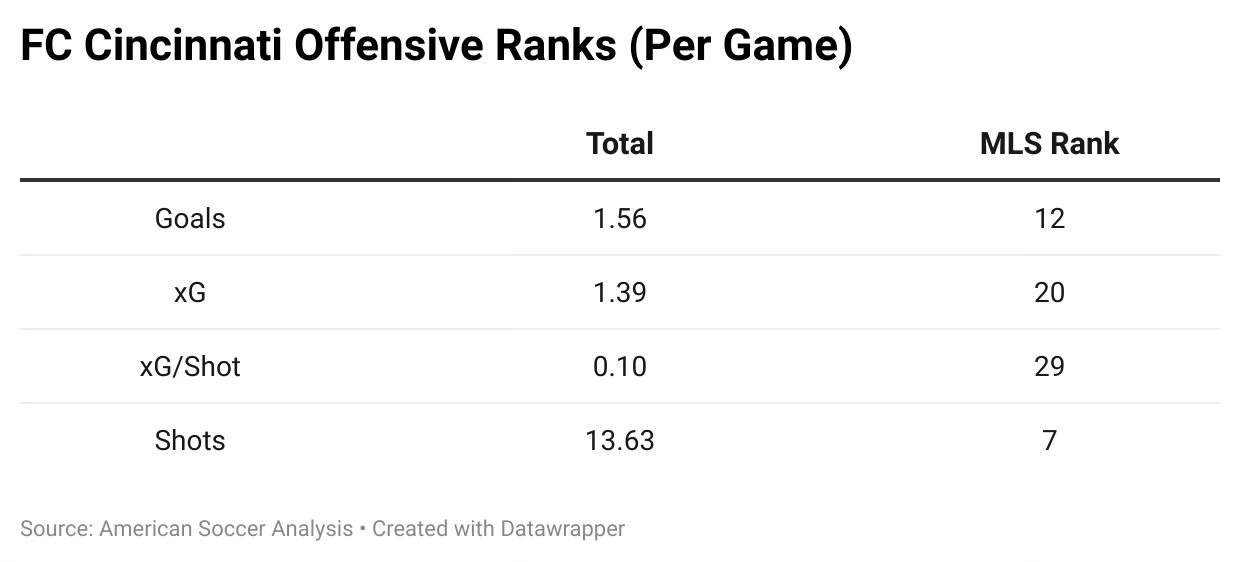
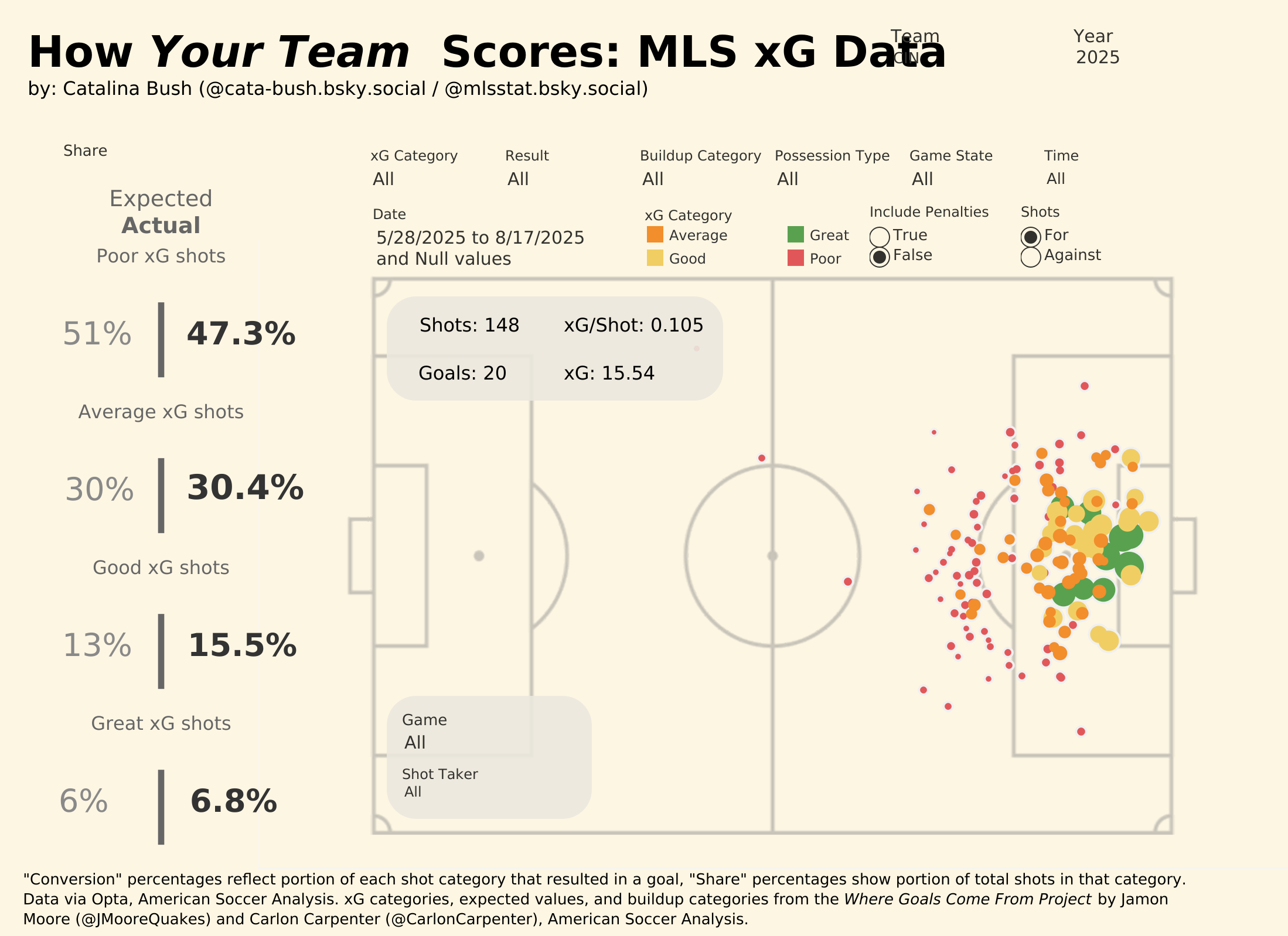
While averaging the seventh most shots in the league, the Orange and Blue rank second to last in xG per shot. The team’s 1.56 goals per 96 minutes outstrips its 1.39 xG/96. Simply put, FCC still isn’t creating all that many consistently dangerous scoring chances.
The answer to why FCC is running so much ahead of its xG is simple: long distance shooting. This season, according to Opta data, FCC’s 154 shots from outside the box is the second highest in MLS, trailing only Real Salt Lake’s 159. The ball has gone in, though, keeping FCC’s attack afloat. Ten of the Orange and Blue’s 42 goals came from shots starting outside the box, the second highest total in the league.
To anyone who has watched even some of a FCC game this year, it’ll come as no surprise that the biggest contributor to the success on those shots in 2025 is Evander.
Evander’s (Unsustainable?) Hot Streak
In 2025, Evander has taken 59 shots from outside the box and scored a frankly astonishing nine of them according to Opta data. Unsurprisingly, both of those totals lead MLS.
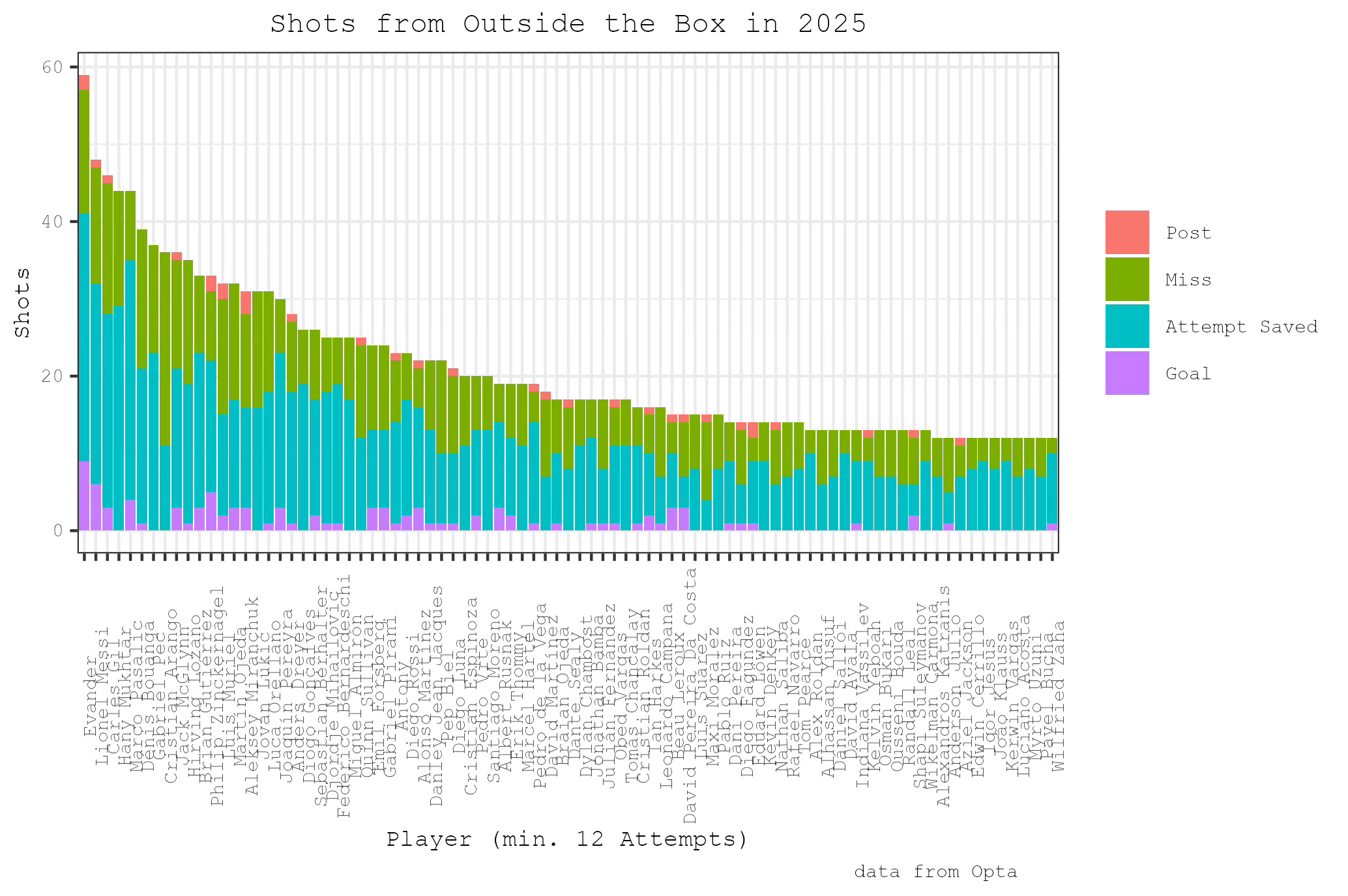
Put in different terms, in 2025, MLS teams have scored on 4.13% of shots taken from outside the box. FCC’s mark is higher, sitting at 6.49%. More than 15% of Evander’s shots from outside the box ended up in the back of the net.
I’m receptive to the idea that Evander and players like him will outperform an xG model on shots from distance simply because they’re better at kicking a soccer ball. Evander’s hot streak from distance is likely way beyond that.
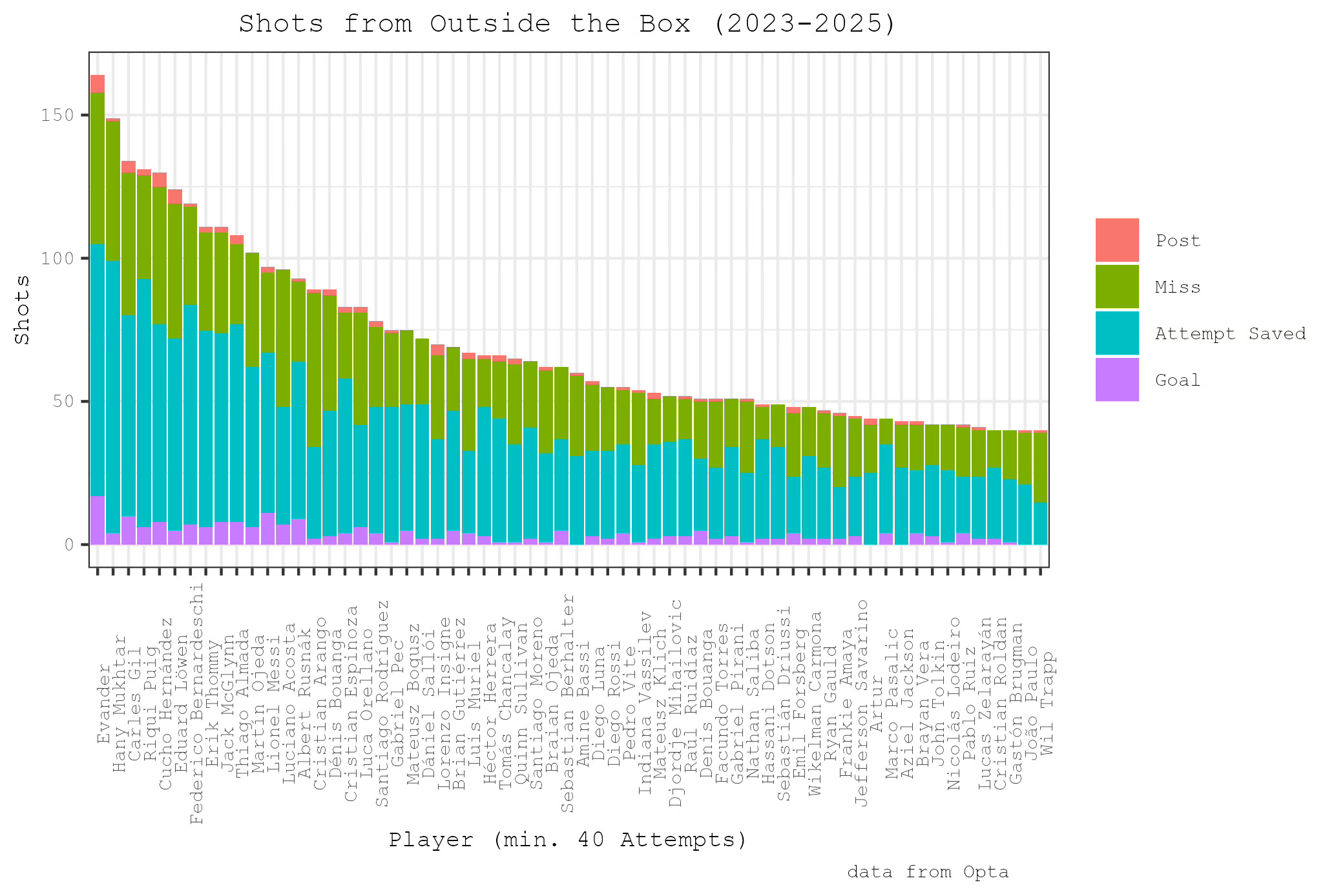
Results from his first two seasons in the league back that up. Since his arrival in MLS, Evander tried the most shots from outside the box, attempting 164 and scoring 17. However, after taking out his 2025 numbers, Evander scored a much more normal eight of 105 attempts.
Two things can be true:
- Evander is one of the best shooters from distance playing MLS, and;
- We shouldn’t expect him to keep scoring at his current pace from outside the box.
Evander isn’t going to stop shooting from outside the box. He might even continue to score from outside the box. But there’s a good chance the ball won’t keep going in at the same rate. Building an offense around what is probably unsustainable in the long-run might be what ultimately dooms the Orange and Blue in its hunt for silverware in 2025.
Could Evander continue to run hot for the rest of the season and throughout the playoffs en route to the Shield and MLS Cup? Anything is possible. But the odds don’t support that.
The Case For Optimism
With the Orange and Blue in position to win silverware, the team will need to find goals elsewhere. The case for optimism rests with the gradual attacking improvements we’ve seen over the course of the season. It’s unlikely that the Orange and Blue are going to become the offensive powerhouse the roster (and their transfer fees) suggest. And that’s okay given the talent at center back and Celentano’s aforementioned good shot stopping season.
Luca Orellano’s return to left wingback has coincided with a more attacking creation in the final third. A target man to play alongside Kévin Denkey has freed the latter to find space in front of goal more often and Ayoub Jabbari’s arrival further solidifies the striker depth chart.
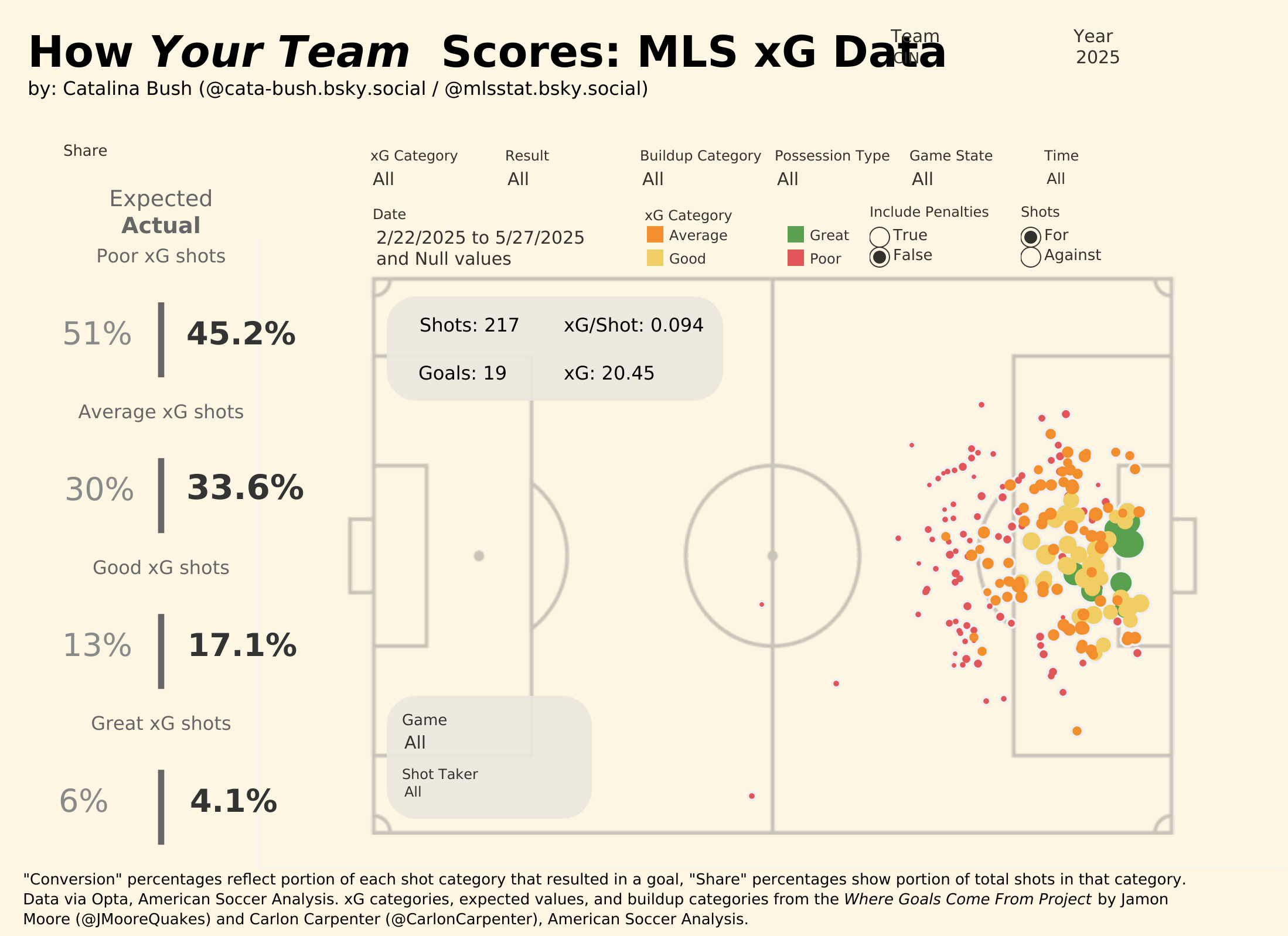
Continuing to diversify the offense will be vital to realize those aspirations. A healthy Denkey and a more dangerous Orellano on the left are big pieces of making that happen.
FCC’s road to a trophy likely runs through winning ugly games with its defense holding on, Celentano making saves, and it’s attack doing just enough to win. Evander’s shots from distance will almost certainly play a role down the stretch but, if the rest of the team continues to figure out ways to make any more of those goals a bonus, not the focal point of the attack, the Orange and Blue stand a better chance to end the 2025 season celebrating.
FBref: 42 goals on 33.4 xG, 34 goals conceded on 39.1 xGA
ASA: 42 goals on 37.61 xG, 32 goals conceded on 42.91 xGA (excludes own goals) ↩


