
Looking Back: What Happened (With the Ball)?
Part III in a retrospective series on FC Cincinnati's 2025 season

All stats courtesy of Fbref unless otherwise noted
Thanks to everyone who has read this venture over the past year. I’ve really enjoyed having a place to spend way too much time thinking about what’s happening with a soccer team from my hometown.
ICYMI:
- Part I (General Takeaways): FC Cincinnati’s second place finish in the Supporter’s Shield was out-of-step with its advanced numbers (and the eye test).
- Part II (Without the Ball): The team was much more vulnerable defensively, even though opponents scored fewer goals in 2025 than in 2024.
FC Cincinnati just never really seemed to click with the ball in 2025. Despite the front office dedicating substantial resources to attacking talent, the team’s offensive performance disappointed. Very little came easy, in stark contrast to how opponents frequently moved the ball against the Orange and Blue.
By expected goals, last season was the lowest offensive output from a Pat Noonan-led team. The team’s 44.5 xG ranked 21st in Major League Soccer though the team’s 52 goals was tied for 12th most in the league, buoyed by Evander’s hot streak from distance.
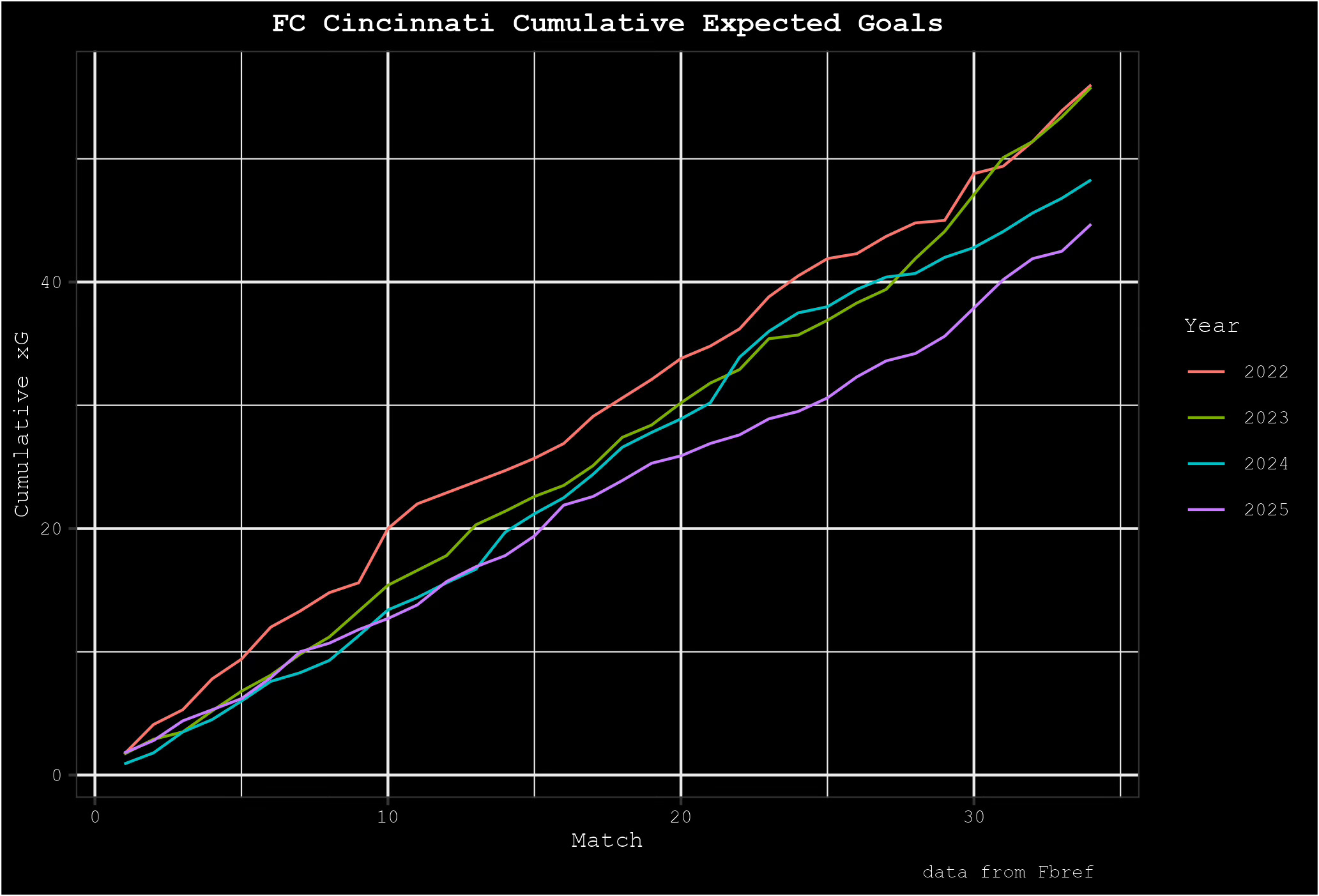
There’s no one reason why the Orange and Blue struggled to score goals; rather, a series of issues combined to limit FCC’s attacking efficacy. So let’s dig into what went wrong when FCC was on the ball in 2025.
Structural Constraints
When they arrived in the Queen City before the 2022 season, all signs pointed to Albright and Noonan implementing the same 4-4-2 diamond shape that had been a key part of their success in Philadelphia. The plan didn’t survive first contact with opposition, as the Orange and Blue opened the season with a 5-0 loss in Austin. After that, and with only a few exceptions, Noonan has favored a more defensively stout setup featuring three central defenders.
That shift has clearly and obviously been a resounding success - the Supporters’ Shield in the team’s trophy case is all the evidence you need. But it creates very specific issues in terms of roster building and on-field flexibility.
In 2022, it was a logical pivot because the roster already featured Lucho Acosta, Brenner, and Brandon Vázquez. Lucking into Álvaro Barreal being an elite wing back brought everything together. Continuing to build around three center backs, two main attackers, and a ball dominant #10 requires specific profiles for the rest of the ten starting outfield players, leaving the front office little margin for error.
Which brings us to FCC’s plan for wing backs in 2025.
Miscast Wing Backs
FCC’s silverware winning 2022 team heavily relied on offensive contributions from Barreal. When he left on loan, Luca Orellano was signed as his replacement, operating in a slightly different but still highly effective way on the left wing. But relying on at least one wing back who can do so much offensively is a big (and expensive ask).
Before the start of last season, Albright and Noonan looked to build off of Orellano’s success as a full-time attacker at the end of 2024 and move him closer to the opposing goal requiring another new left wing back. Enter Lukas Engel on loan from Middlesbrough.
Engel and DeAndre Yedlin just didn’t offer the ability on the ball the team needed to attack effectively. This shouldn’t have been a surprise. Engel profiled as more defensive minded player at Middlesbrough, with limited attacking upside in the final third. Yedlin has never been very effective at passing the ball forward or setting up teammates in the final third.
We also have to talk about the allocation of resources, too. Engel and Yedlin were among the highest paid outside backs in MLS in 2025. Both are solid players (if misused in Orange and Blue) but if there’s a place to cut corners in a starting eleven, outside back is usually it. FCC had gotten great roster value out of Barreal and Orellano but in 2025 ended up with two outside backs who took up a lot of cap space but didn’t provide the same high level of attacking production FCC needed.
The lack of ball progression and incisiveness in the final third is how you end up with a Horseshoe of Sadness on a year end passing chart.
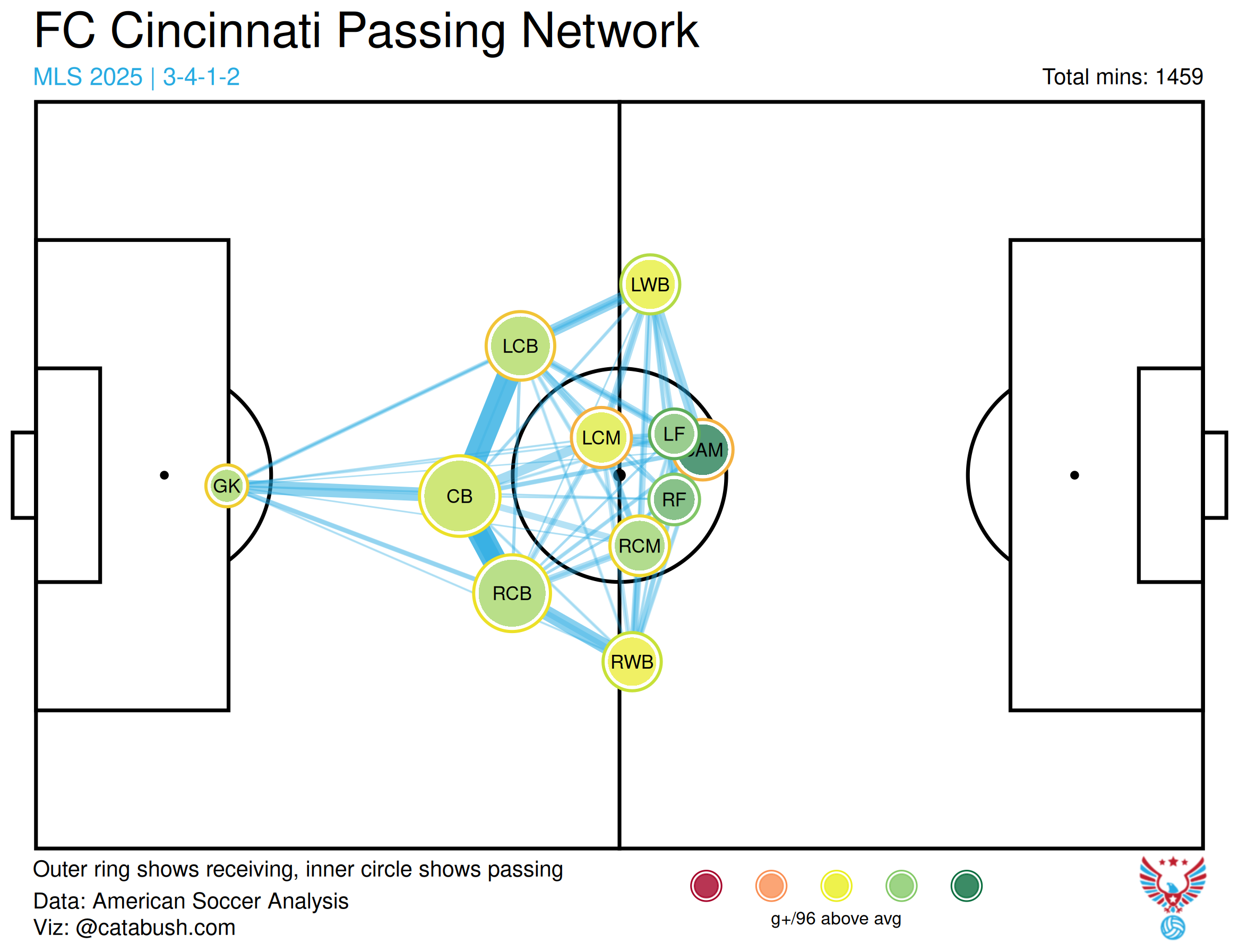
Not The Right Meta
The 3-2-5 in possession structure is one of the most popular among the best teams in the world. It pushes enough attackers forward to manipulate opponents’ defenses while maintaining a solid defensive shape to prevent counter attacks after turnovers.
Teams get there in variety of different ways. Some hold an outside back and they join two central defenders in a line of three. Other teams push a midfielder forward and have an outside back invert into the midfield two. FCC’s three center back shape with two central midfielders ahead of them set up perfectly to move to a 3-2-5 in possession with little trouble. On the tactics board, it makes all the sense in the world. For FCC, there were just a few problems.
The team also struggled to consistently move the ball forward. Miles Robinson is a very good passer but FCC’s other center backs were rarely threats to break defensive lines and find teammates up the field. Even with wing backs dropping a little deeper, neither Yedlin nor Engel proved to be very effective progressing the ball.
In midfield, Pavel Bucha is a good ball progressor, both dribbling and passing, but his counterpart, either Obi Nwobodo, Tah Brian Anunga, or later Samuel Gidi struggled to move the ball forward consistently. Playing just two true midfielders often left them out numbered in that part of the field, too, forcing players into passes they didn’t seem comfortable attempting.
The lack of progressive passing from the team’s wing backs, center backs, and one half of the midfield meant inconsistent delivery to FCC’s attackers in the most dangerous parts of the field.
When the ball was in the final third, FCC’s wing backs weren’t dangerous enough to offer much of a threat. Per FBref, Engel and Yedlin combined to create 0.19 expected assisted goals (xAG) per 90 minutes in 2025. The previous season, FCC’s primary left wing backs, Orellano and Yamil Asad created 0.23 xAG and 0.27 xAG per 90. That’s a huge difference! Ender Echenique’s arrival was a positive, injecting some much needed juice into a stagnant FCC attack, but not at the same level as Barreal, Orellano, or Asad. Getting him into that tier of creation will be key to 2026 and beyond if Noonan and company decide to stick with this general structure.
With the outside two in FCC’s attacking band of five generally ineffective, opponents could sit narrower and further constrict the space occupied by FCC’s three primary attackers. There were other issues, especially early in the season, with spacing between Orellano and Evander. Brenner solved a lot of problems when he made his return in the summer but could only just paper over the cracks of the roster’s foundation.
Much has been made of the on field chemistry between Kévin Denkey and Evander but the simplest fix to getting a better season from FCC’s star striker is to ensure that the ball is in the final third more consistently and to surround him with better wide attacking options when it gets there.
Evander ≠ Lucho
Ball progression issues aren’t especially new for Noonan’s FCC team, but before last season there was an easy solution: just let Lucho Acosta do everything.
In Orange and Blue, Acosta dominated the ball, almost single handedly moving it up the field by either passing it to teammates or dribbling it himself. Acosta was also a consistent option to receive the ball from teammates making forward passes. Once in the final third, Acosta was an attacking hub, creating shots for himself and teammates and opening space for others with his gravity.
Simply, he was a one-player ball progression and chance creation machine.
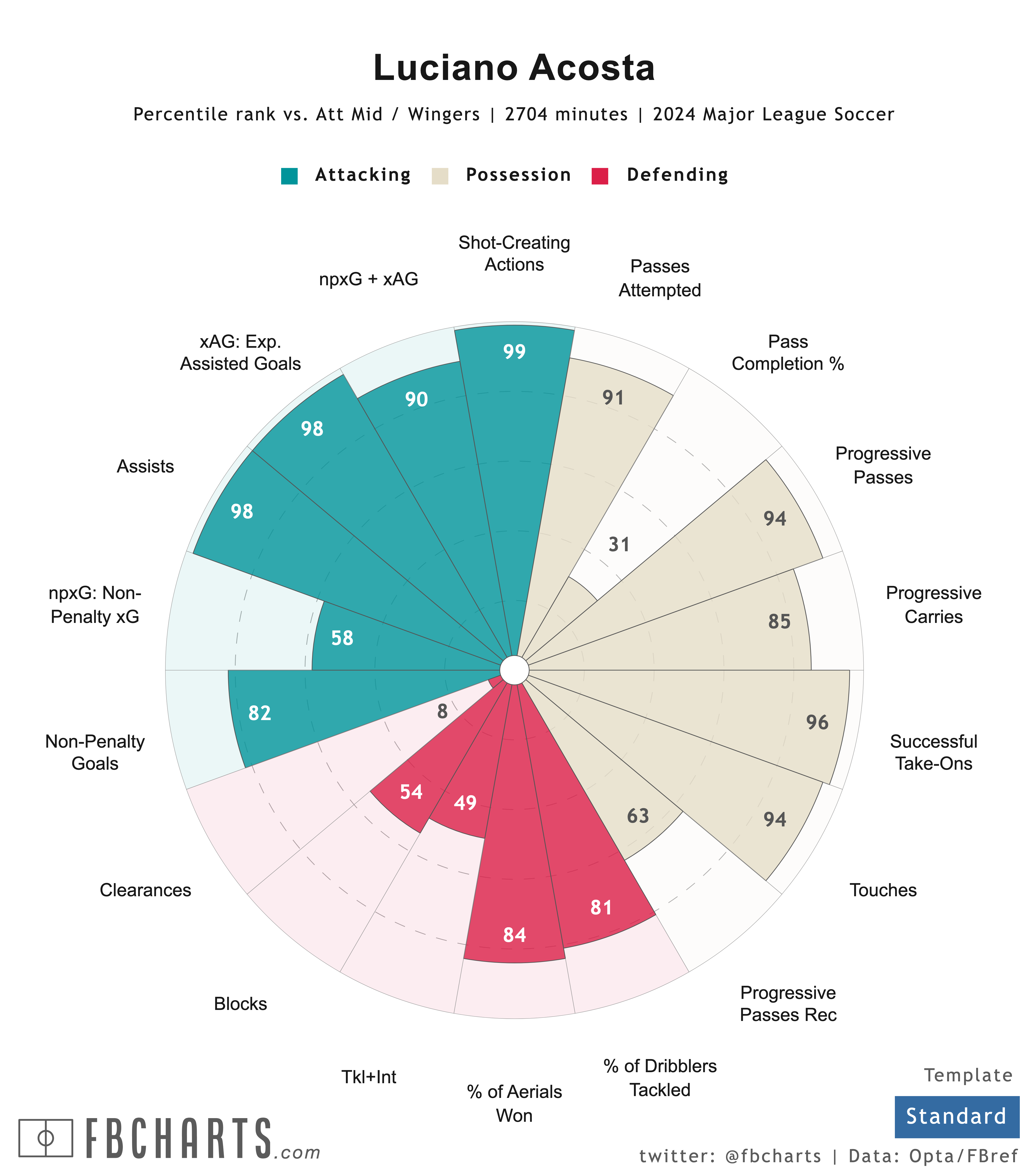
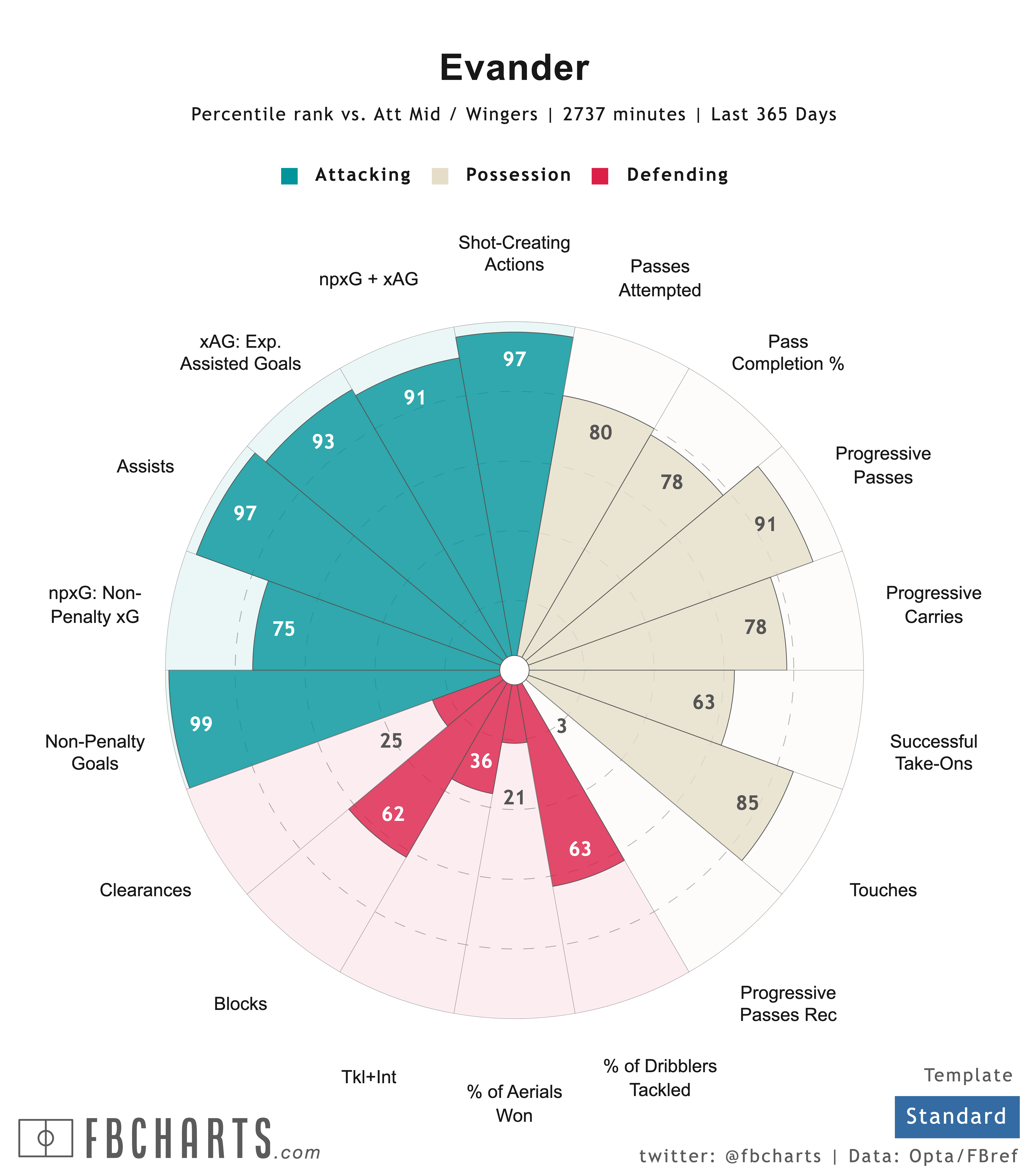
Evander isn’t the same do-it-all kind of player. He does a solid amount of ball progression but hasn’t shown the same ability to find open space forward to receive it. Evander is just a little less ball dominant and doesn’t have the same explosive ability on the ball to beat defenders as Acosta. Without Lucho’s one-vs-one ability, more turnovers on dribble attempts meant more transition defending opportunities, putting FCC’s defense in tough spots.
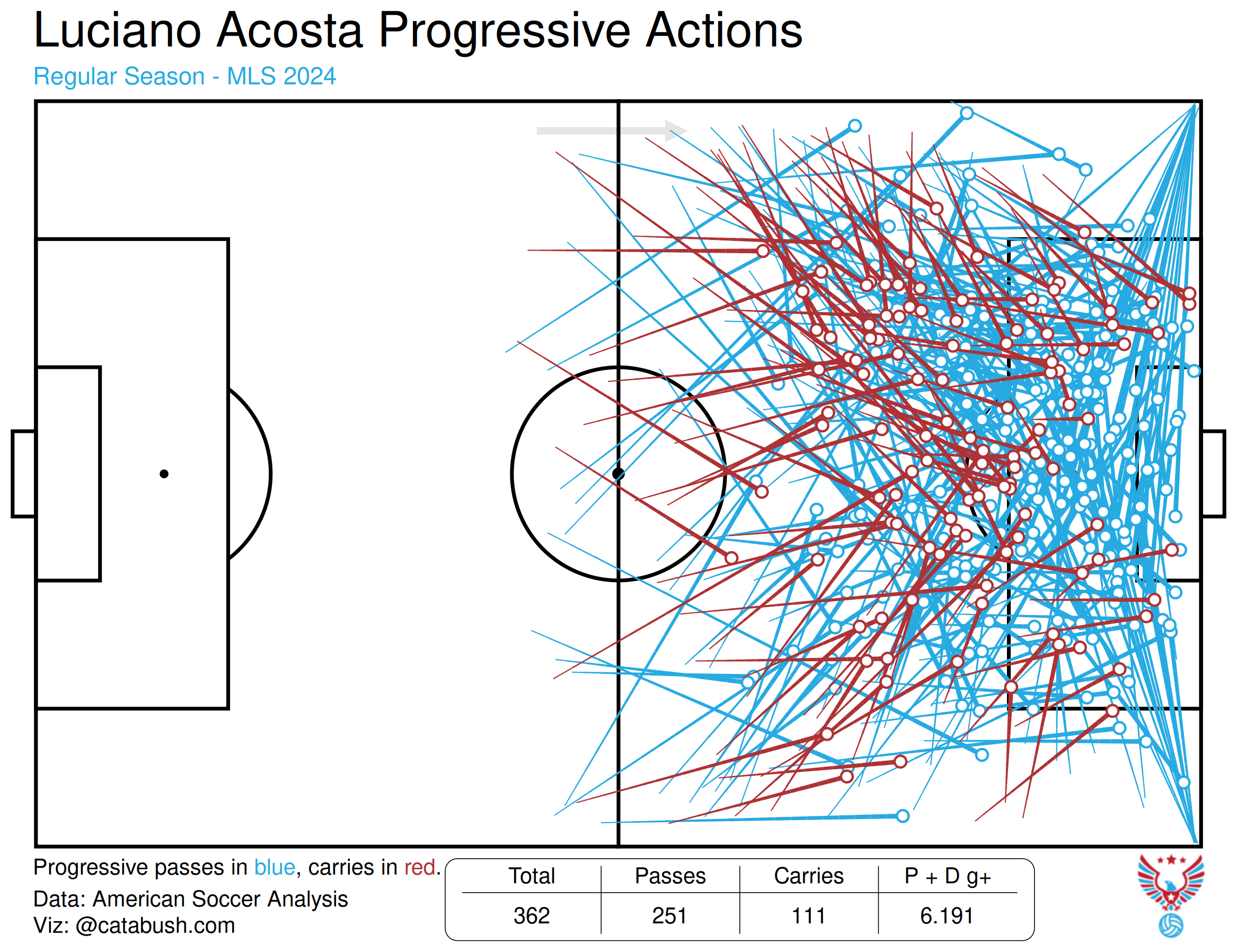
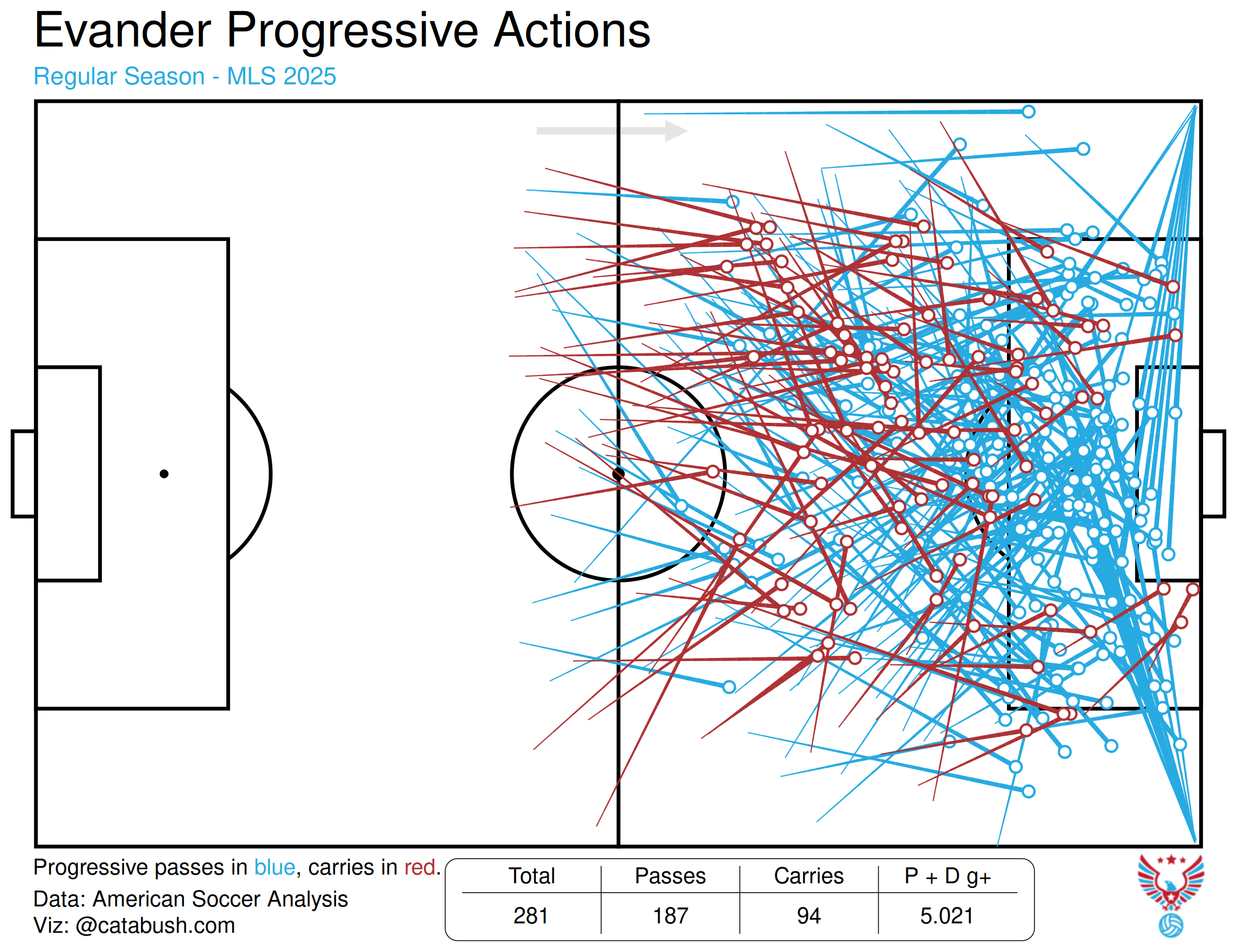
For Evander last season, many of his dribbles moved the ball closer to the box but not into truly dangerous areas. In an ideal world, Evander would be the one receiving a pass in the final third, near the top of the box, rather than the one getting it there.
The front office was in a tough spot with how long Acosta’s situation dragged out was resolved but just dropping Evander into the team didn’t put him in the best position to succeed. A top priority of the offseason for the front office should be about how to make Evander’s life easier and put him in positions to succeed more often.
Looking Ahead
Unfortunately, there isn’t One Weird Trick that will fix FCC’s issues in possession. There will be plenty of time this offseason to debate the merits of formation changes, to analyze profiles of new signings and speculate how they’ll fit in on the field. I hope you’ll be back in 2026 as I try to figure that out.


