
In Search of Defensive Answers
A deep dive on what's gone wrong defensively for FC Cincinnati so far in 2026 and where the team can go from here.

Before the World Cup break, FCC's General Manager Chris Albright told Laurel Pfahler that he and manager Pat Noonan watched every goal and big chance the team conceded had conceded so far in 2026 in an effort to pinpoint the defensive issues that were on full display through the team's first 15 games.
This defensive slide didn't exactly come out of nowhere. As I've written previously, the Orange and Blue's defensive record in 2025 was a paper tiger, with a lot of luck (and good goalkeeping) papering over clear deficiencies.
 nrg
nrg
But, with an offense that has rediscovered some menace, FCC's goal prevention is the thing that drags them away from real contention.
(I'll be doing my best to show my work, so expect more than a few charts approach from the indispensable American Soccer Analysis Viz Hub. If you're reading this in your email or on your phone, prepare yourself for some scrolling)
Taking Stock
The Orange and Blue entered the World Cup break with 20 points, overall a pretty fair result given the advanced numbers underpinning the team's performances.
Over last offseason, lots was made of improving FCC's attacking efforts and xG in the offseason and that effort has seemingly paid off. That's the good news. The bad news is that the team's defensive record has continued to worsen, moving from slightly below average in 2025 to bottom third in the league in 2026.
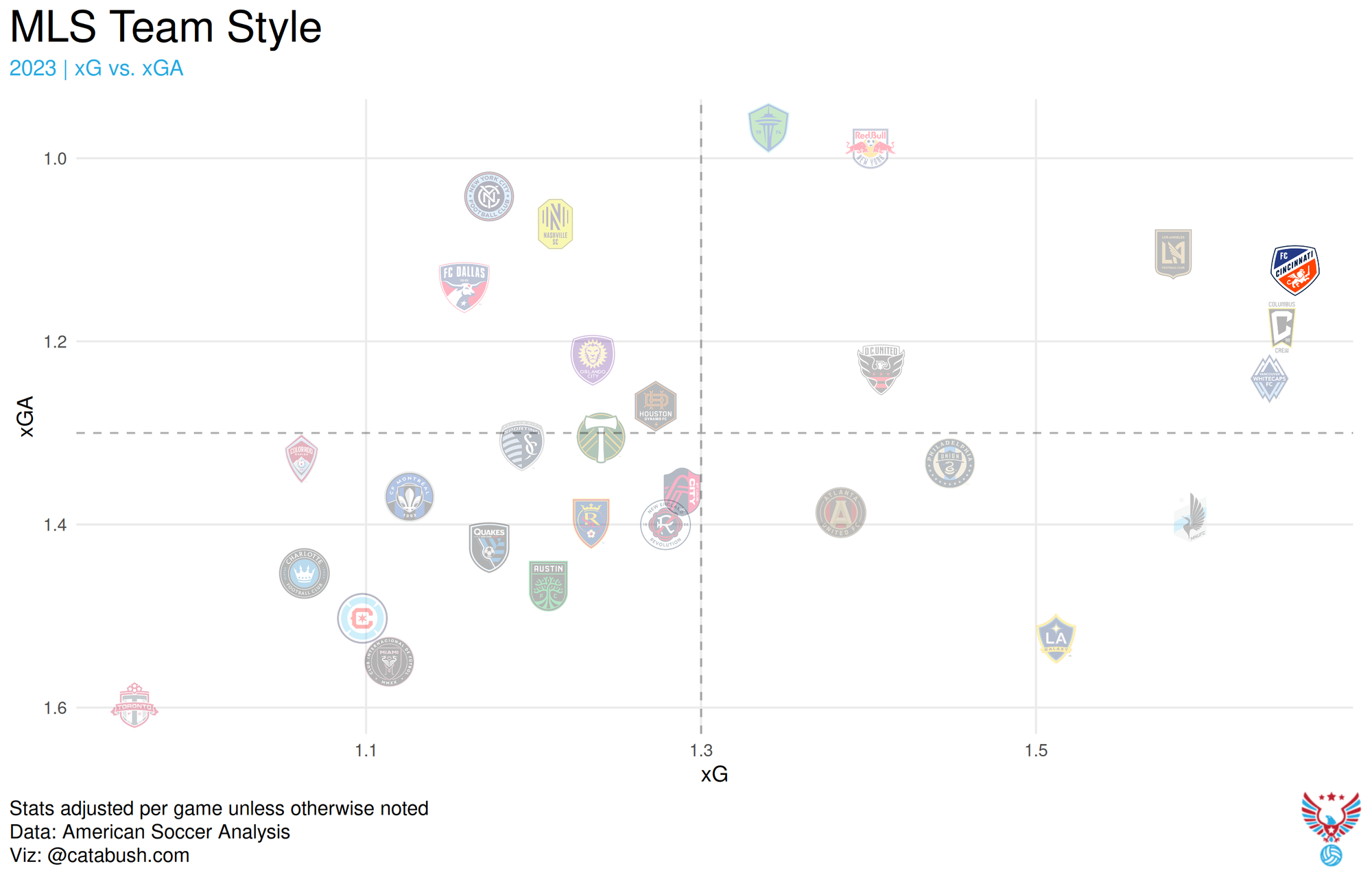
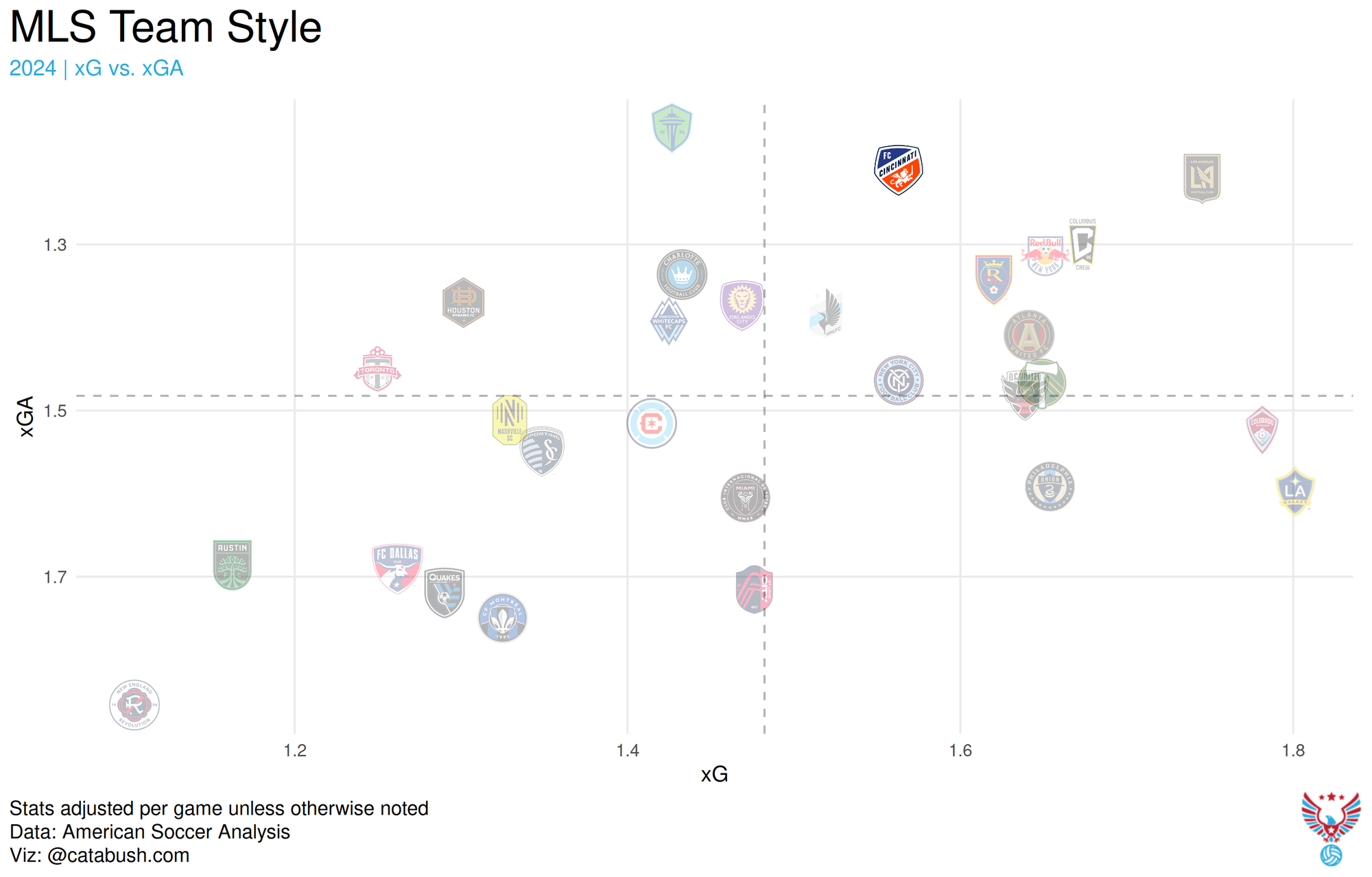
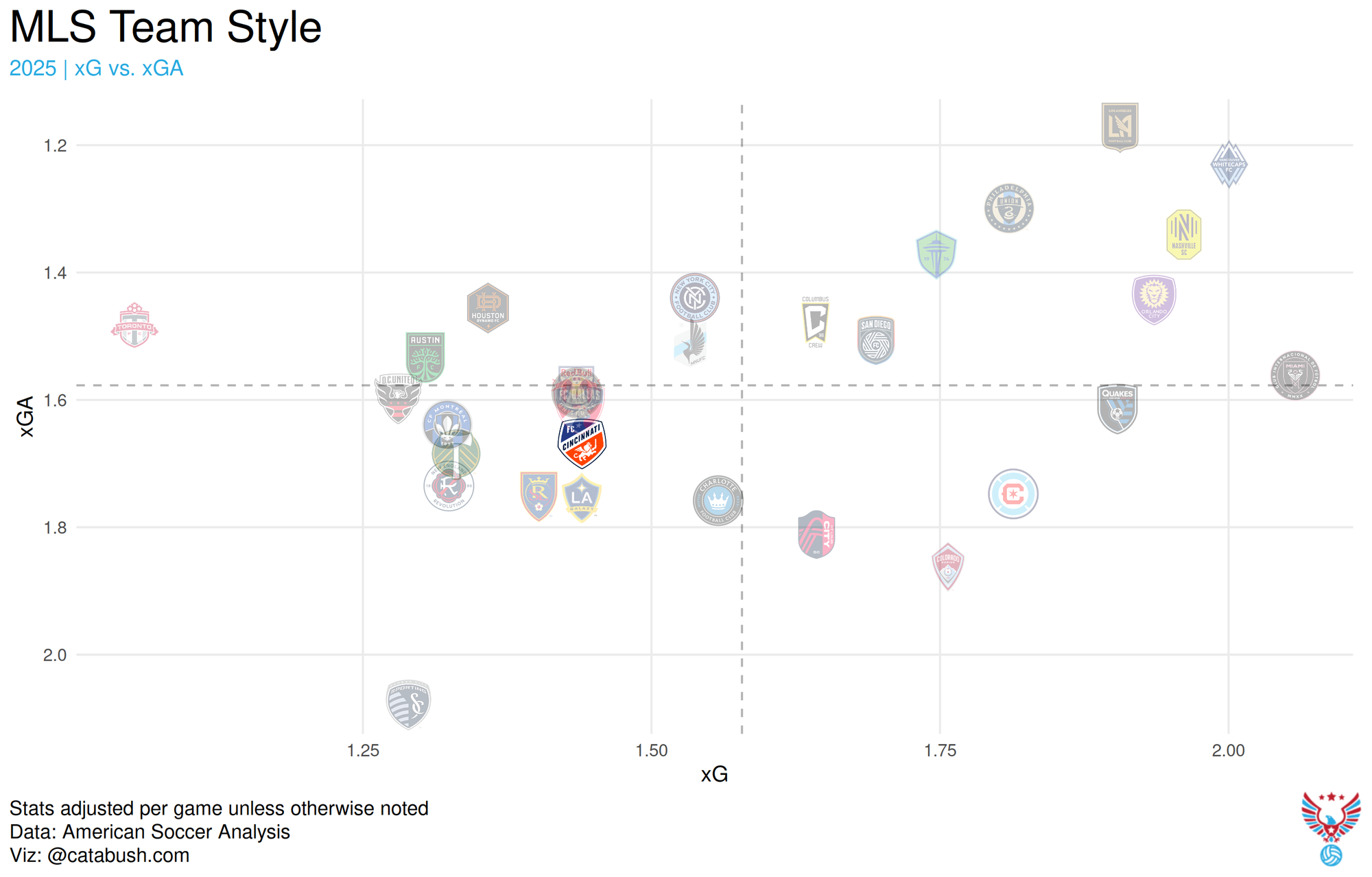
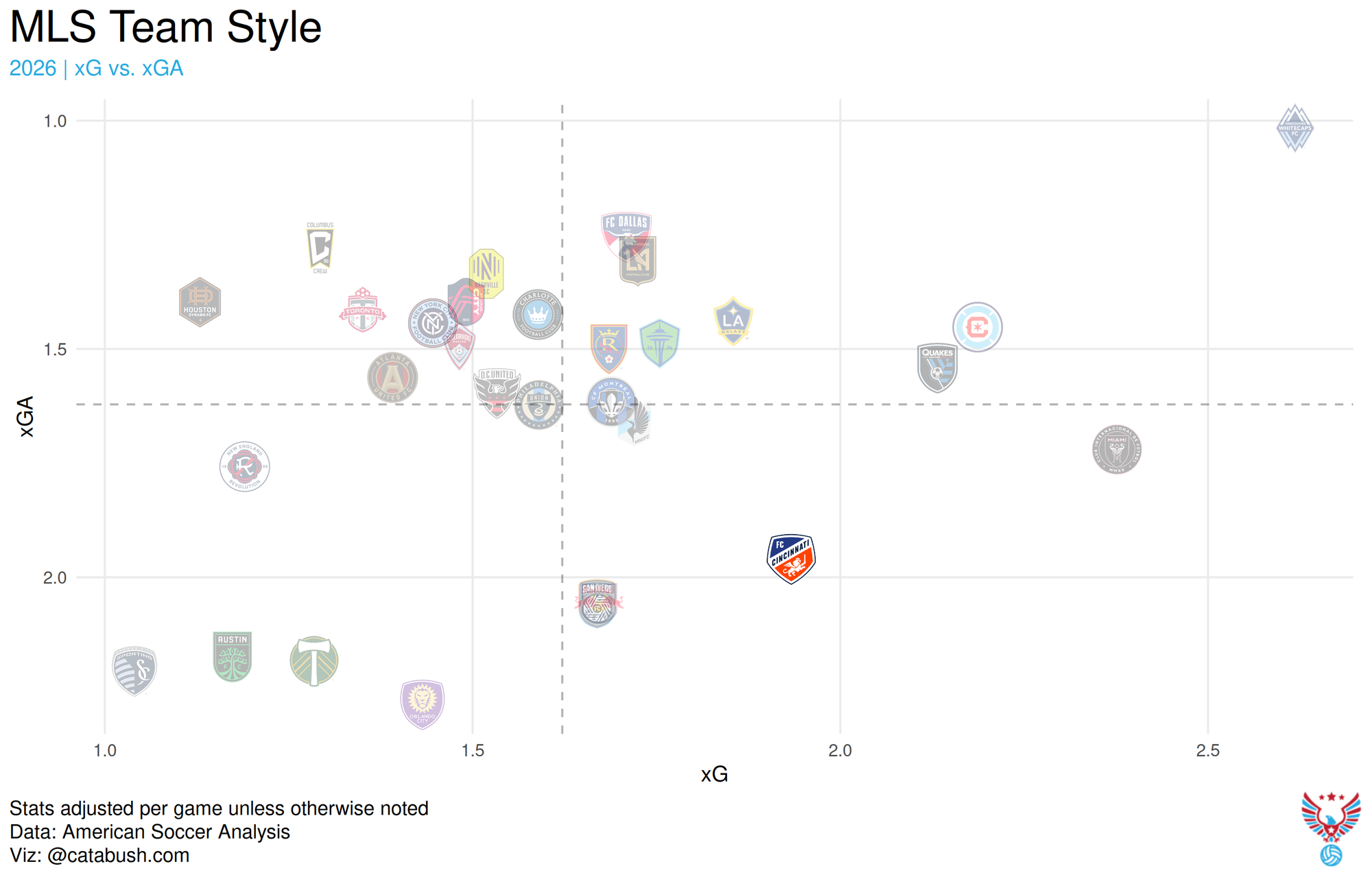
The TLDR of the last four seasons of FCC advanced numbers is this:
- 2023: The Supporters' Shield Winning team was firmly in the very good defense and offense quadrant, but featured an elite attack.
- 2024: Still solid going forward, but one of the best defensive teams in MLS.
- 2025: Defensive and offensive regression to the bottom left quadrant meaning below average at both.
- 2026 So Far: Offense back to above average, further defensive regression. Firmly in the exciting quadrant - lots of goals, just for both teams.
So how did FCC go from a team that was elite at preventing opponents' chances to below average to bad over the course of two years?
Styles Make Fights
Coming from Philadelphia Union teams that valued pressure over possession, Albright and Noonan adopted a similar approach with FCC. In 2023, the Orange and Blue were content to allow opponents to have the ball in the attacking third, looking to absorb pressure and attack on the counter. It clearly worked.
The next season, in 2024, the team looked to be more ball dominant. FCC was among the league's leading teams in field tilt, and even though it didn't translate to a dynamic attack, imparting some level of control on the ball in the final third buoyed the team's defensive record.
 nrg
nrg
Last season and into this one, that interest in possession has fallen by the wayside again. The Orange and Blue being in the historically bad cluster (although it's still early) in 2026 with Orlando, Sporting Kansas City, Austin FC, and the Portland Timbers would represent another major step back defensively.
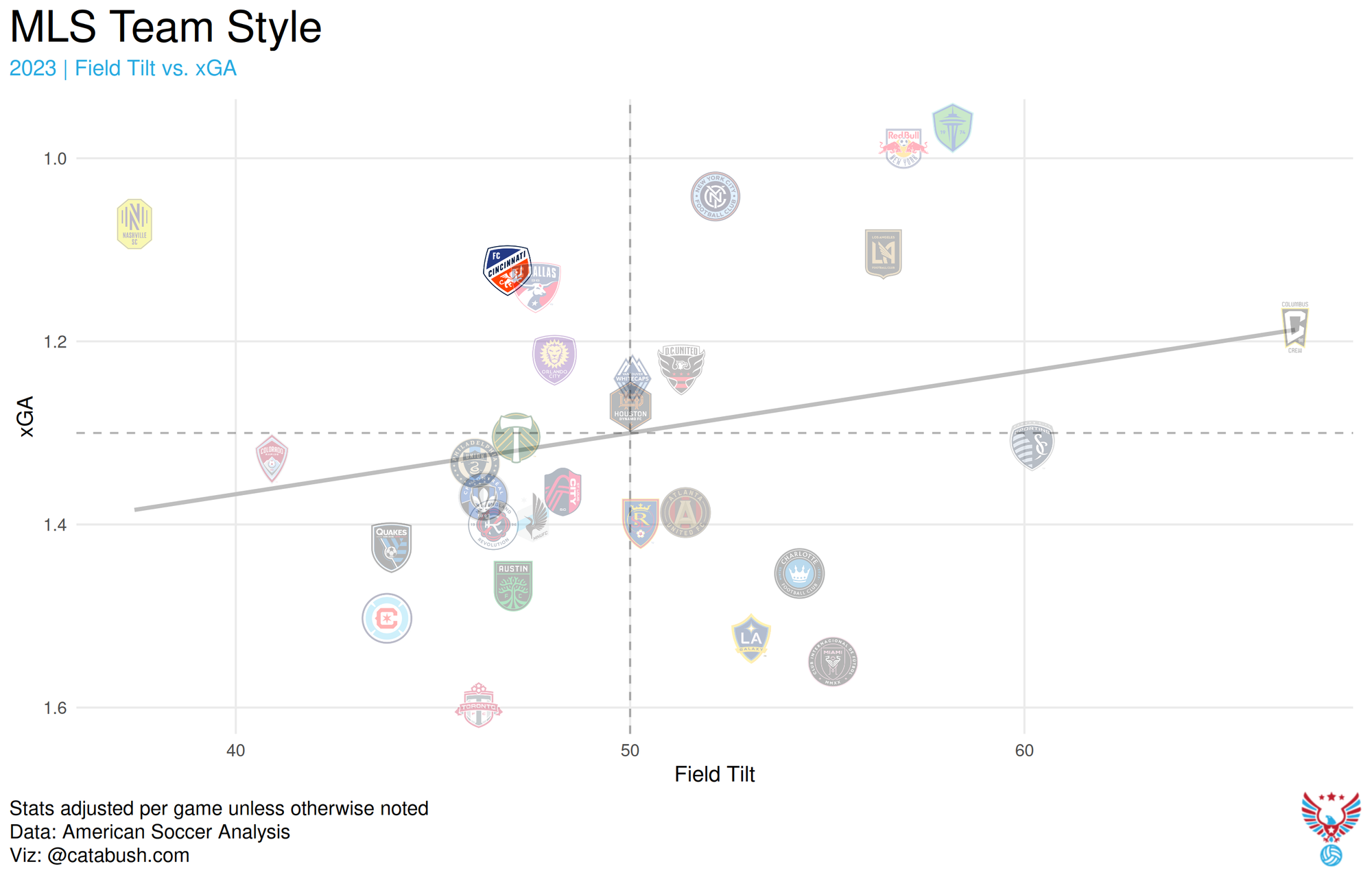
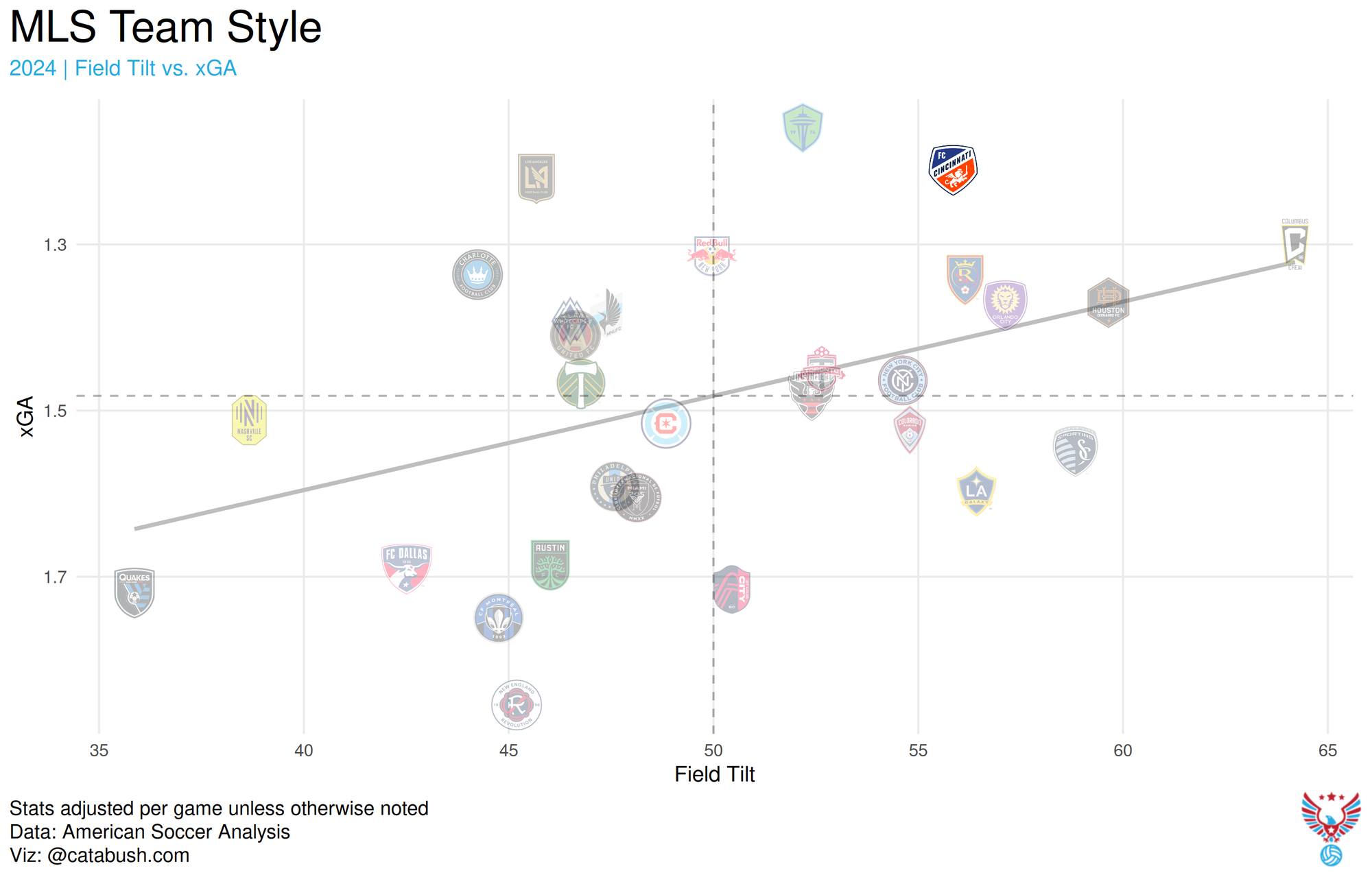
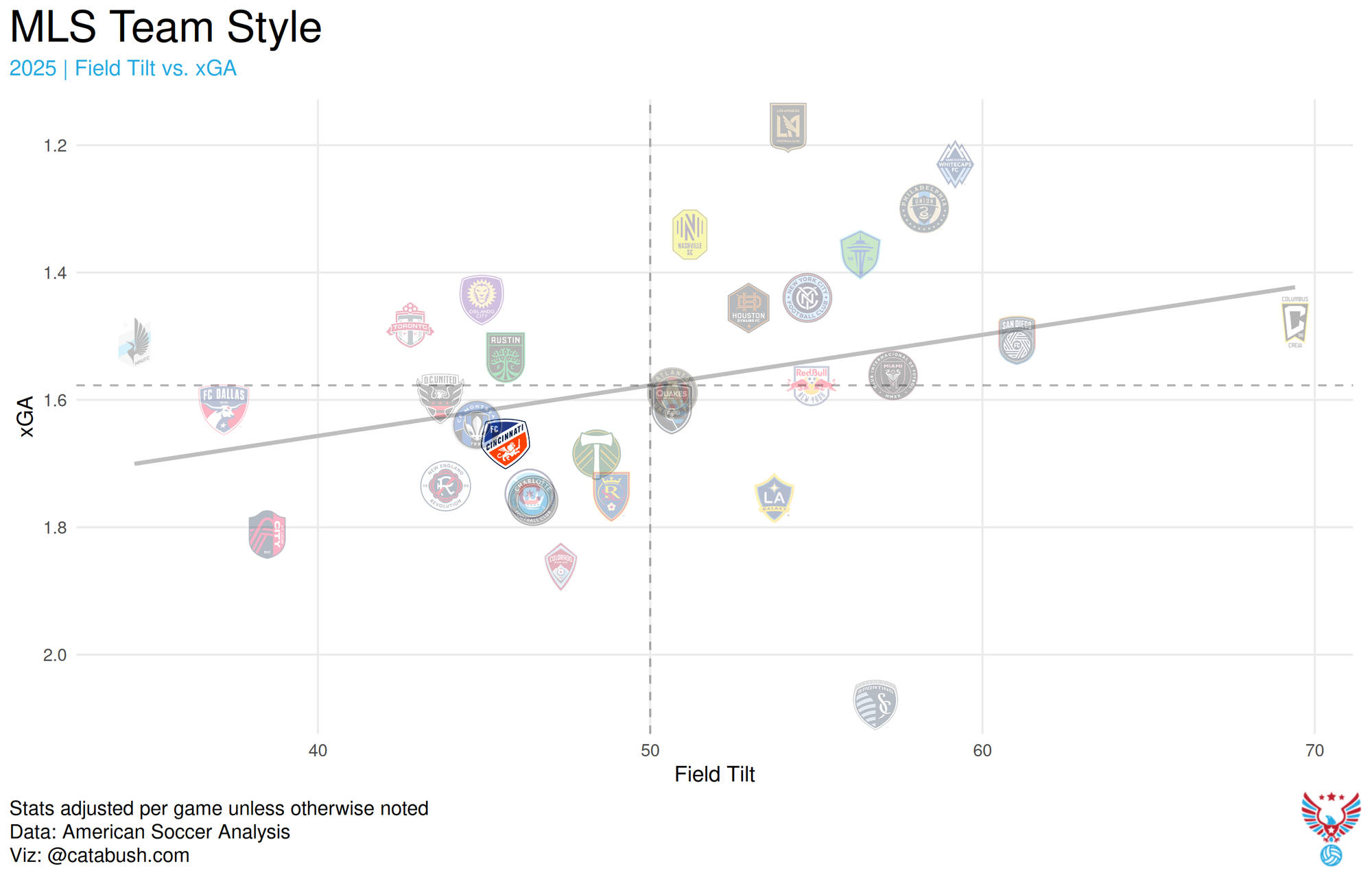
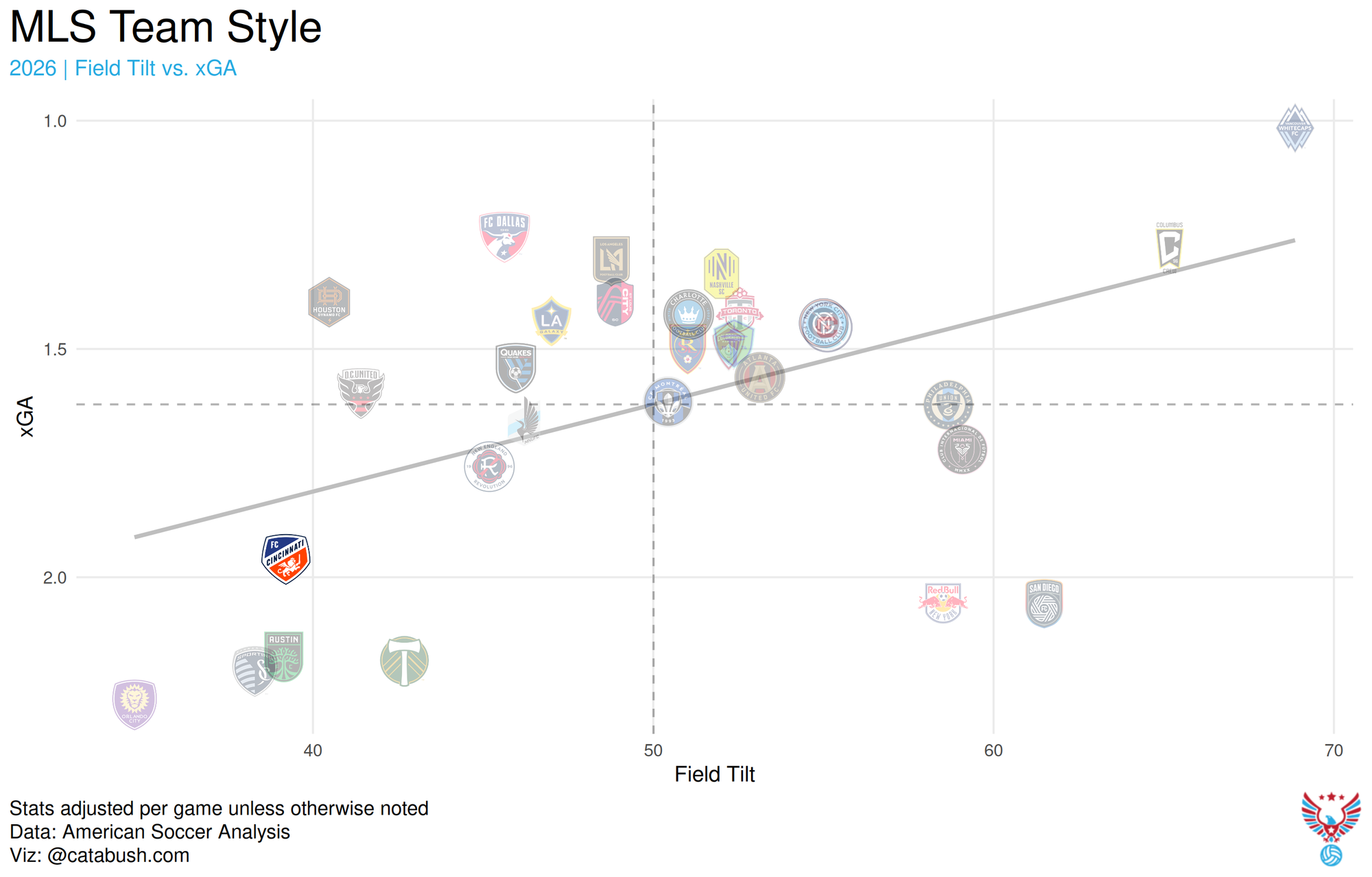
Winning the field tilt battle doesn't mean everything - just look at NYRB or San Diego in 2026 or SKC last year - but generally, teams that have the ball more than their opponents in the final third concede less danger. However, those general trend lines in these charts are hard to ignore.
Some of 2026 can still likely be chalked up to a small sample size. A game like FCC's first matchup against Chicago when the team conceded nearly five expected goals (xGA) weighs more heavily in the average in 13 games rather than across all 34. There's certainly enough data to be worried, though, and the front office and coaching staff clearly share that sentiment.
The Simple Explanation
Why FCC's defense has gotten worse is simple enough, really. The Orange and Blue started conceding a lot more really great chances. In both 2023 and 2024, with different approaches to possession, FCC held opponents to about 1.3 xG per game in the regular season. In 2023, more than 80% of shots allowed were "poor" or "average" by xG quality. Even as the Orange and Blue surrendered better opportunities in 2024, the team's emphasis on possession meant that opposing teams took fewer shots overall, balancing out the danger.
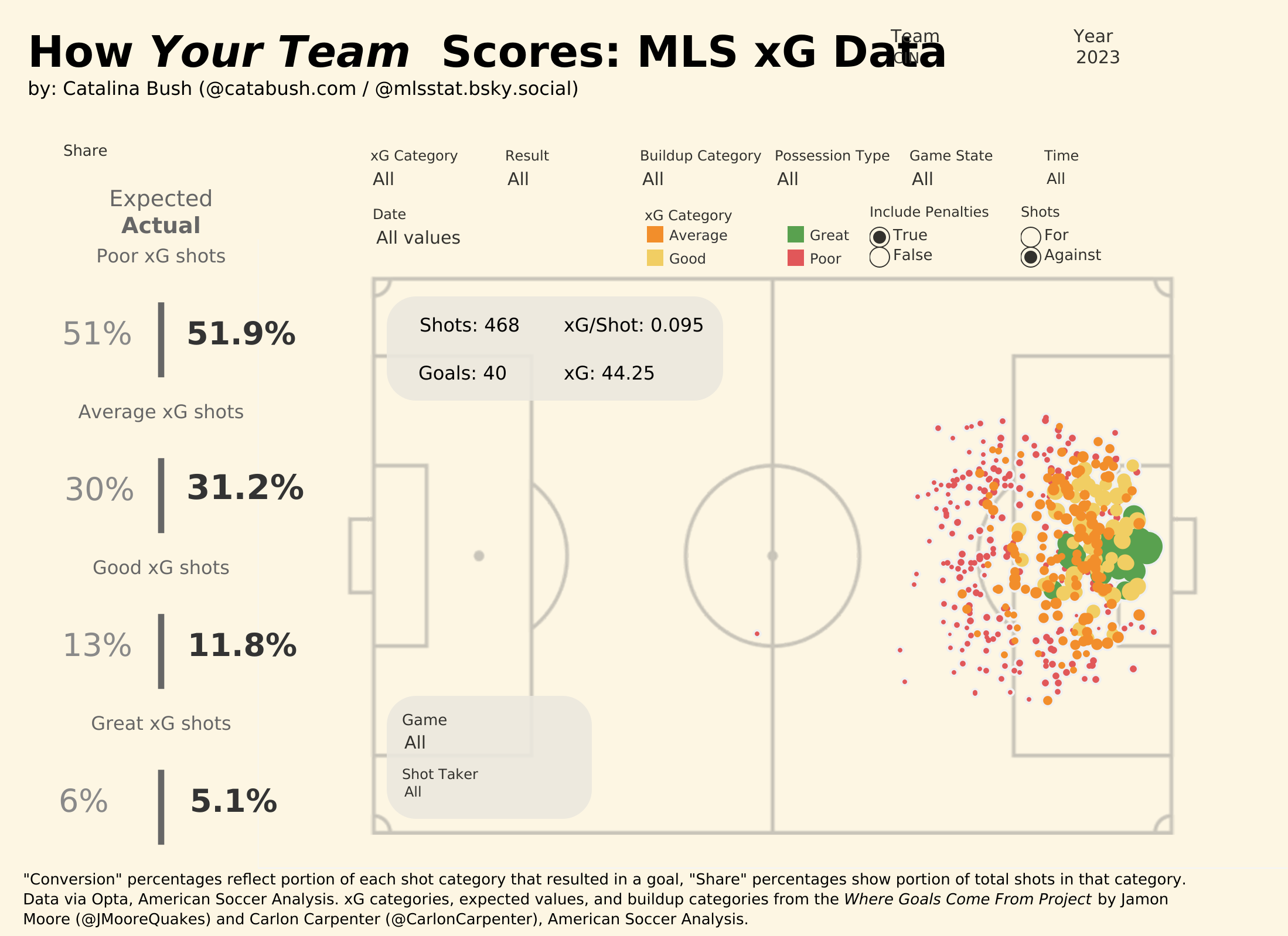
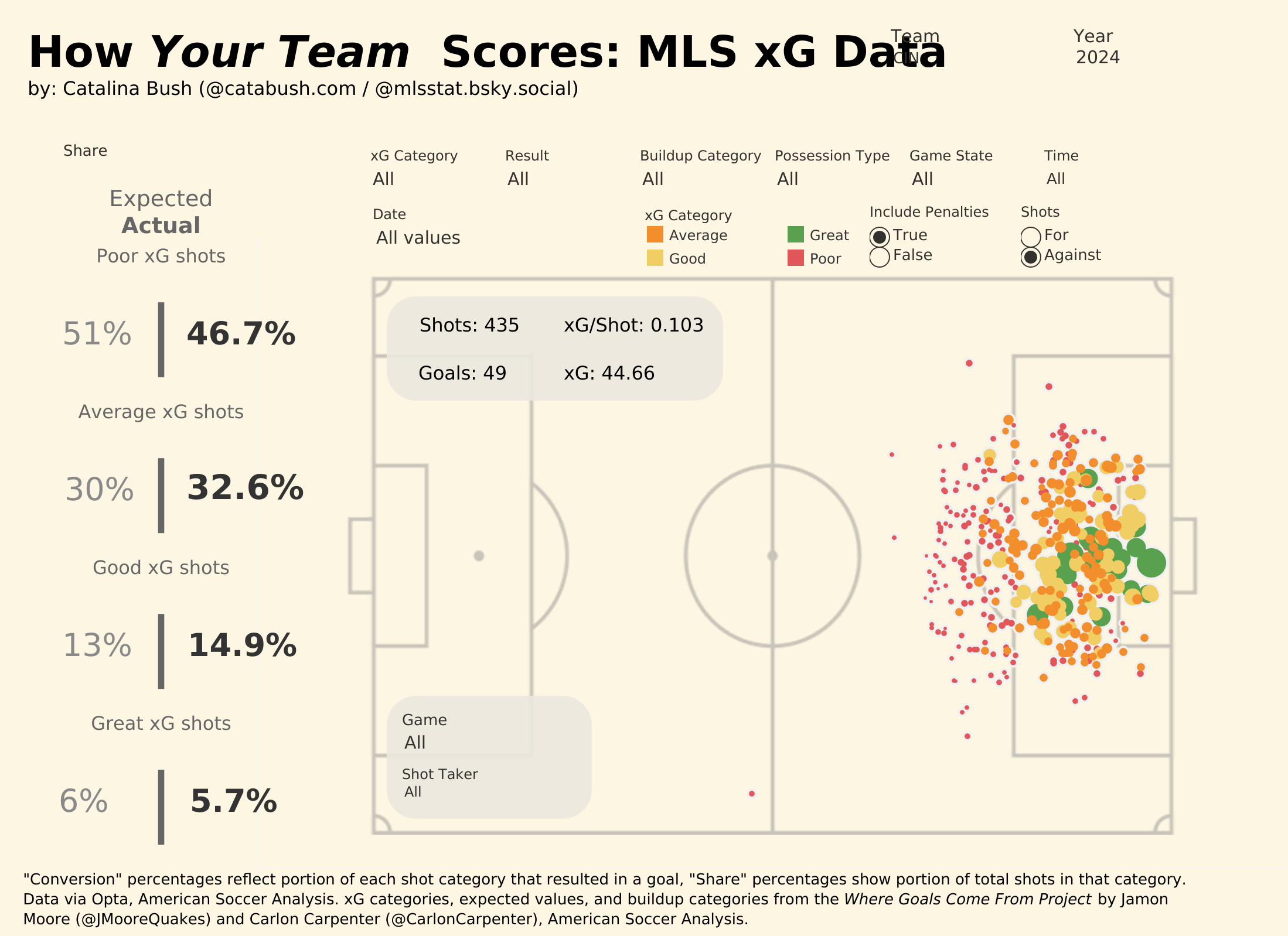
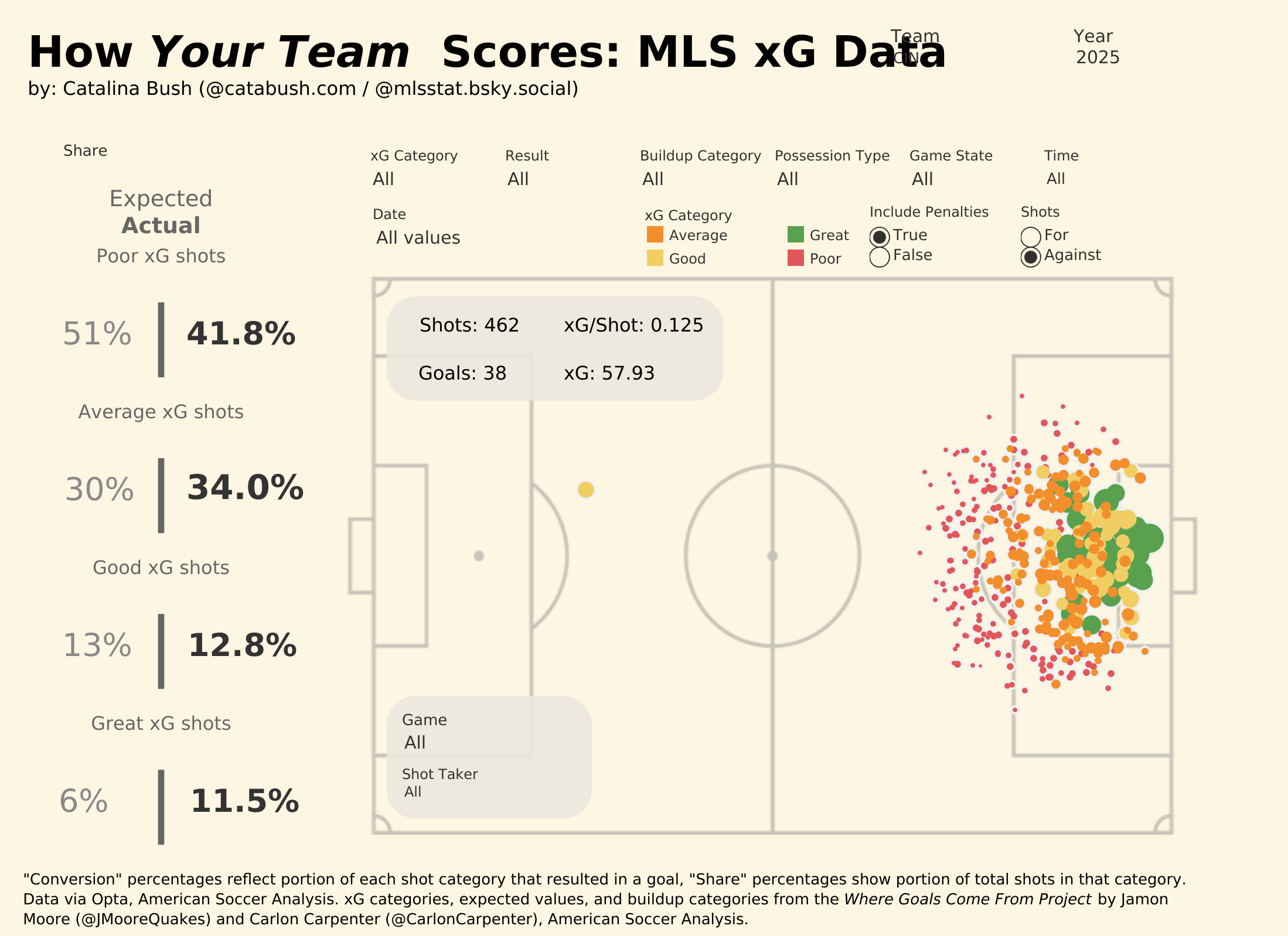
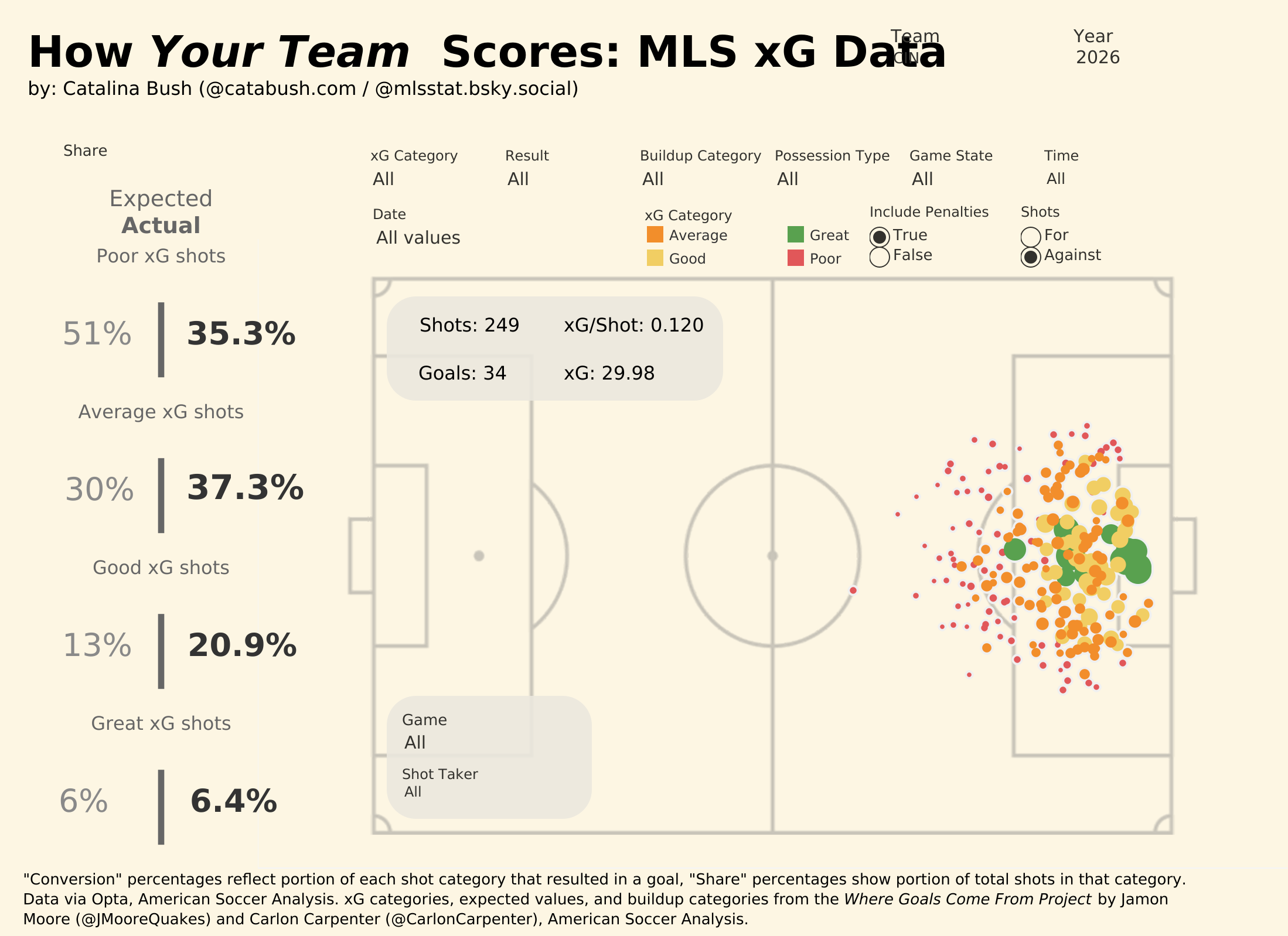
In 2025 and 2026, that jumped to more than 1.70 xGA per game, with either "good" or "great" xG attempts making up more than 23% (!) of chances allowed in 2025 and more than 27% (!!!) this season. The ball just didn't really go in much for opponents last year, but this season, the regression to the mean has been real and tough to watch at times. Even if FCC has conceded fewer "great" chances this season, allowing an opponent a "good" shot on more than 20% of their attempts is a recipe for disaster.
It's obvious but worth reiterating - the Orange and Blue's defense has stopped preventing opponents from generating high quality chances. Even if you're an xG-skeptic (which, if you are, and have made it this far in the post, congratulations), replace "good" or "great" xG chance with "good" or "great" scoring opportunity and the impact is the same.
What Changed?
Why exactly FCC's defense basically stopped being good is much more difficult to parse. The Orange and Blue are defending just as high in 2026 as they did in 2023. There's been a slight decrease in how much defending per game is occurring, but compared to the rest of the league, FCC is doing slightly more. Similarly, they're conceding a few more touches in their own danger area, but not nearly enough more to explain such a dramatic defensive fall off.
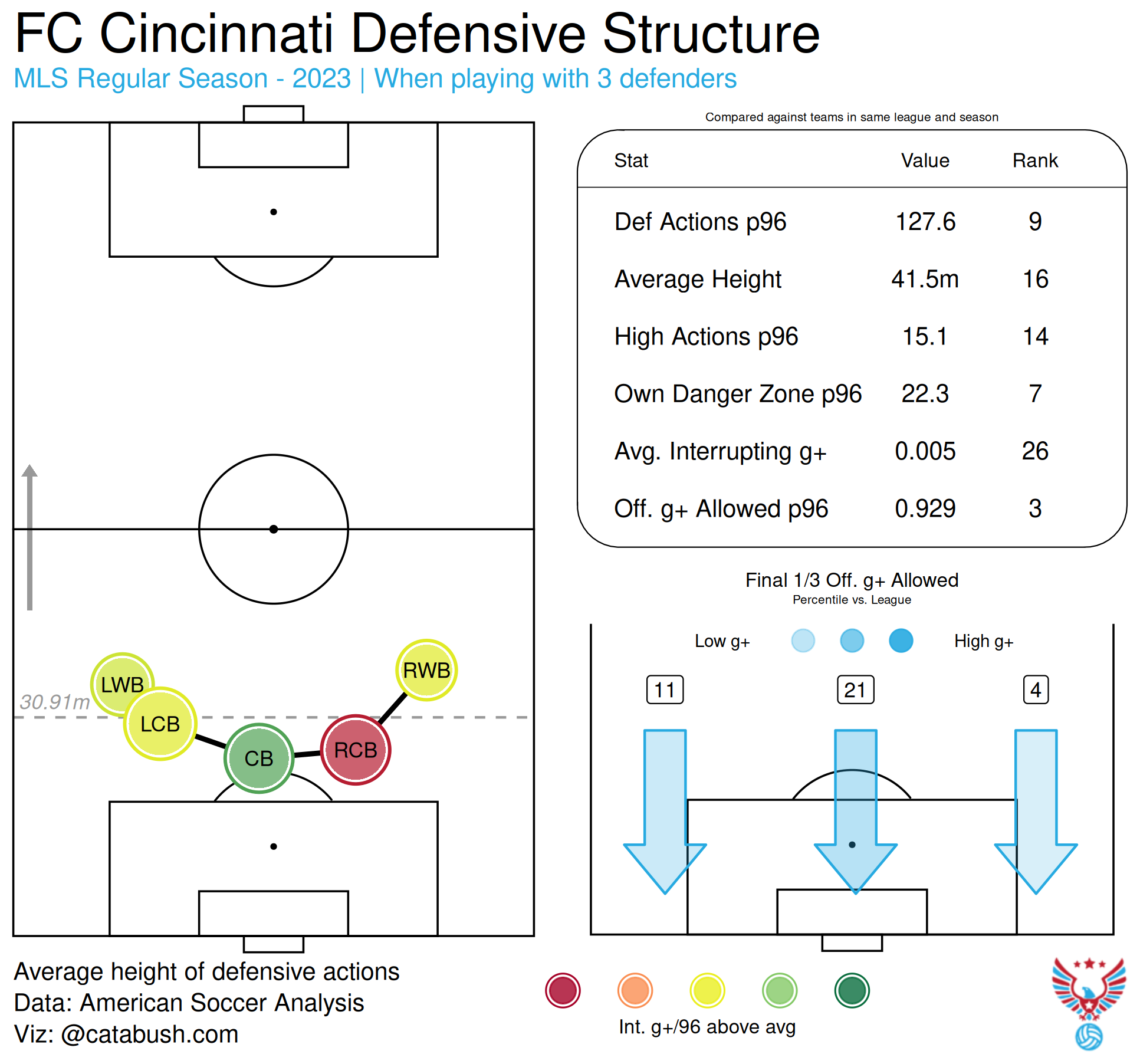
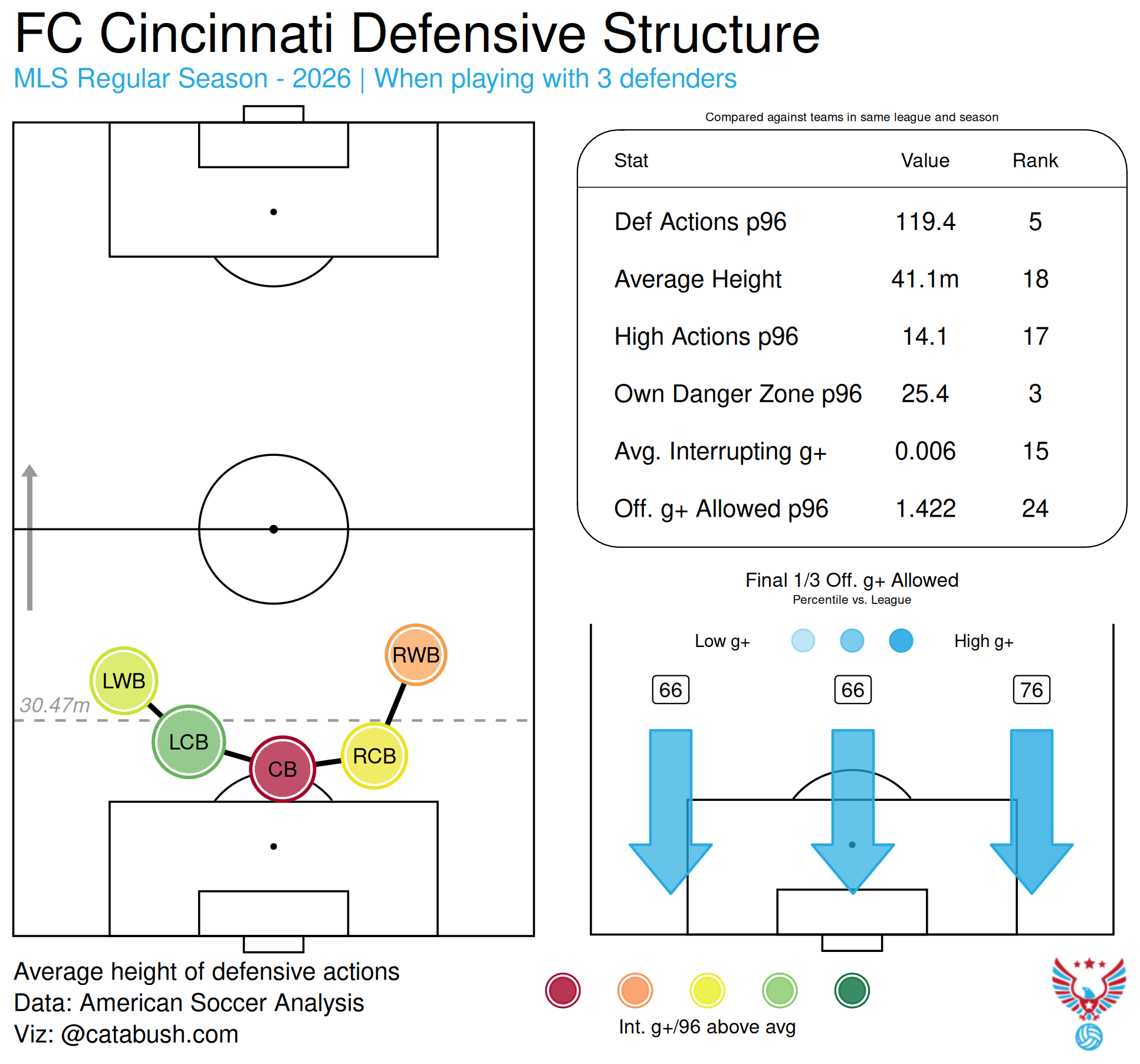
Looking at more granular, player-level data shows something that has been pretty apparent from the eye test: players just aren't defending as well as they did in 2023 on an individual basis. That goes for just about every position.
A major component of ASA's G+ defensive calculations - interrupting - can be a bit of a double-edged sword. It's great to know who is making clearances, winning tackles and interceptions, and other on-ball actions, but defense is more than that. Just because a defender is doing a lot of defensive things successfully doesn't mean a team is actually good at preventing goals. You can insert that Paolo Maldini's quote here, I guess.
ASA's G- attempts to measure a defender's impact not by tackles or interceptions, but by how much danger passes through zones in their responsibility. It's not perfect, but it's another data point to the more traditional defensive event statistics. When combined with the on-ball defensive G+, you get Net Defensive G+.
Using somewhat arbitrary cutoffs (>1,000 minutes for players in 2023, >450 minutes for players in 2026), we're left with the following breakdown by position group across the two FCC seasons. It's pretty ugly reading.
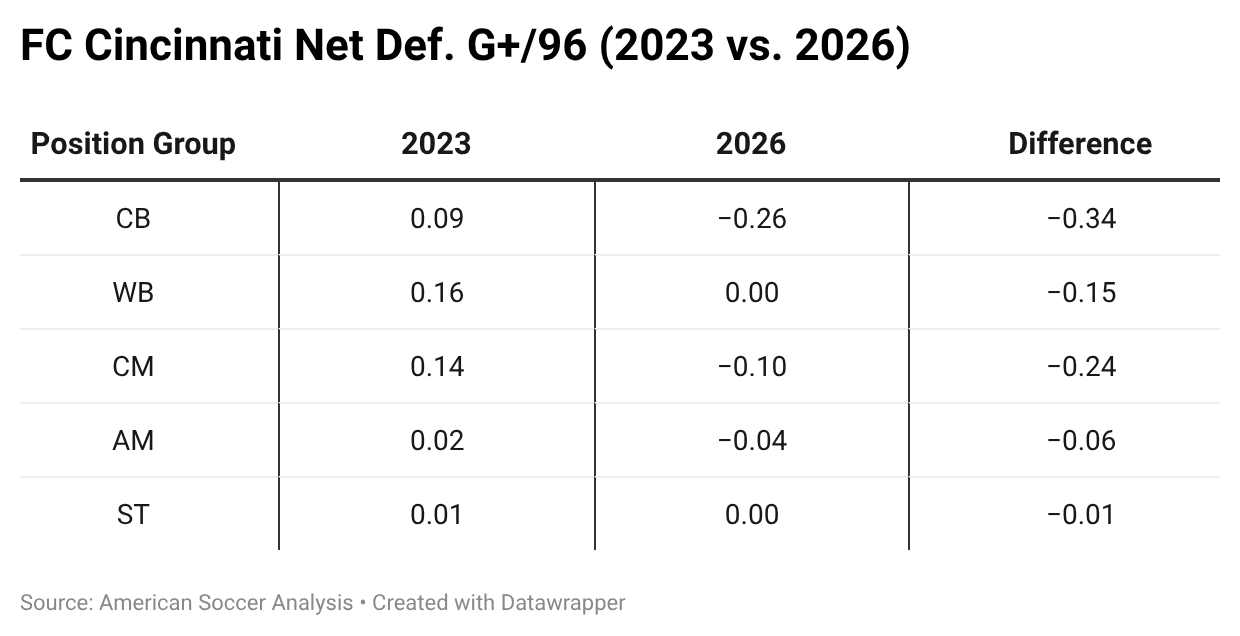
This is a lot of numbers to bear out something that I think is pretty clear from the eye test. Just about everywhere on the field, FCC players are defending worse - in some cases much worse - in 2026 than in 2023. Some of it is probably age or injury related and some of it is different skill sets from players on the field, but whatever is, the team just isn't as good defensively.
The 2023 defense featured elite center backs (Matt Miazga, Yerson Mosquera), one very good defensive wing back (Santi Arias and Alvas Powell, combined), an elite defensive midfielder (Nwobodo), and a very good second center midfieler (Junior Moreno). Lucho Acosta contributed more than Evander has, especially pressing, and the 2023 strikers were likewise more impactful pressers than their counterparts this year.
But if you're going to try to defend in a similar way to 2023, generally inviting pressure, but forcing opponents to take bad shots, you need defenders who can win on-the-ball as well as deny space in their zones of responsibility. The Orange and Blue just don't have that right now in their defensive setup, and that's why we're trying to figure out a fix in the summer window.
Fixing It
Returning to Albright's comments heading into the break, he said, "we're going to look at personnel as well as structure" in an effort to improve the Orange and Blue this summer.
Personnel-wise, it would be just about impossible (to say nothing of expensive) to bring in enough new players to elevate the defense to 2023 levels. Would a hypothetical addition at center back do enough to add some backbone? Very possibly. But the problems run deeper than one (or even two) players at that position. With the way FCC's roster resources have been allocated, there's little reason to believe that the team's defenders will compare to 2023 in over the rest of the 2026 season, if ever.
There's a scenario where the players on the roster start playing better defensively, in fact, I'd expect some positive regression to the mean assuming Miles Robinson returns healthy from USMNT duty. But is that enough to really change the fortunes of the Orange and Blue?
Any structural or tactical change is made more difficult by the team's current roster construction. This team isn't built, or set up, to press aggressively and FCC's heavy emphasis on three center back set ups already limits how much midfield control the team can exert during a game.
The roster as currently constructed just isn't going to be able to win defending the same way it did in 2023. It's unlikely that FCC's roster is suddenly going to be full of plus defenders again, and there's just too much turnover that would need to happen to make that. It might be easier (and better for the team's long term prospects) to shift the game model to one that denies the opposition the ball more.
So if the actual refresh that Albright talked so much about in the offseason of FC Cincinnati begins this summer, I won't be complaining. Hopefully it'll be towards something more sustainable and flexible, rather than chasing 2023, because I fear those days are well and truly past.


