
And We're Off

In just a few days, we've gone from seeing zero minutes of FC Cincinnati soccer to having more than 180 minutes of competitive soccer to analyze. It's way, way, way too early to draw any real conclusions about what'll happen this season but two wins from two games is, by definition, the perfect way to start the season. That both were convincing wins makes things even better.
There's not a whole lot to say about FCC's 4-0 win on the road over Universidad O&M in CONCACAF Champions Cup play. It was nice to see a mostly rotated team go on the road and dominate a game but the competition is almost certainly the weakest on the Orange and Blue's schedule this year.
There's more to take away from FCC's 2-0 win against Atlanta United on Saturday afternoon. Even though it's just one week and Atlanta might not be very good at the moment (or maybe this season), the Orange and Blue actually dominated a game en route to a win. According to Fotmob (RIP Fbref's Advanced Data), FCC racked up a 1.81 expected goal difference (xGD) on Saturday. In 2025, FCC's biggest positive xGD was 1.6, coming in the team's 1-0 win against the New England Revolution in April.
Single-game xG isn't predictive - far from it - but it can be descriptive. On Saturday, the Orange and Blue dominated a game to an extent that we rarely saw in 2025, if at all. It took a while for the breakthrough to come but creating a couple of really good chances and limiting the opposition to basically nothing is a convincing way to win a soccer game.
A few specifics popped out to me about the game, too:
1: Refresh Or Return
With offseason talk centering around a five-year refresh for the Orange and Blue, Saturday's game offered the first real look into what that would mean on the field. Unfortunately, Evander's unfortunate early substitution limits how much we can read into what the game plan with the ball was meant to be.
Still, we got a FCC team intent on looking direct. According to data from futi, Noonan's game model hasn't remained constant. Some things have, like FCC's emphasis on attacking through the center of the field and willingness to high press. One of the major shifts between 2023 and 2025 has been how often the team looks to transition forward with direct play. FCC in 2023 was one of the most direct teams in the league. By 2025, the team was in the bottom third in MLS in direct transitions.
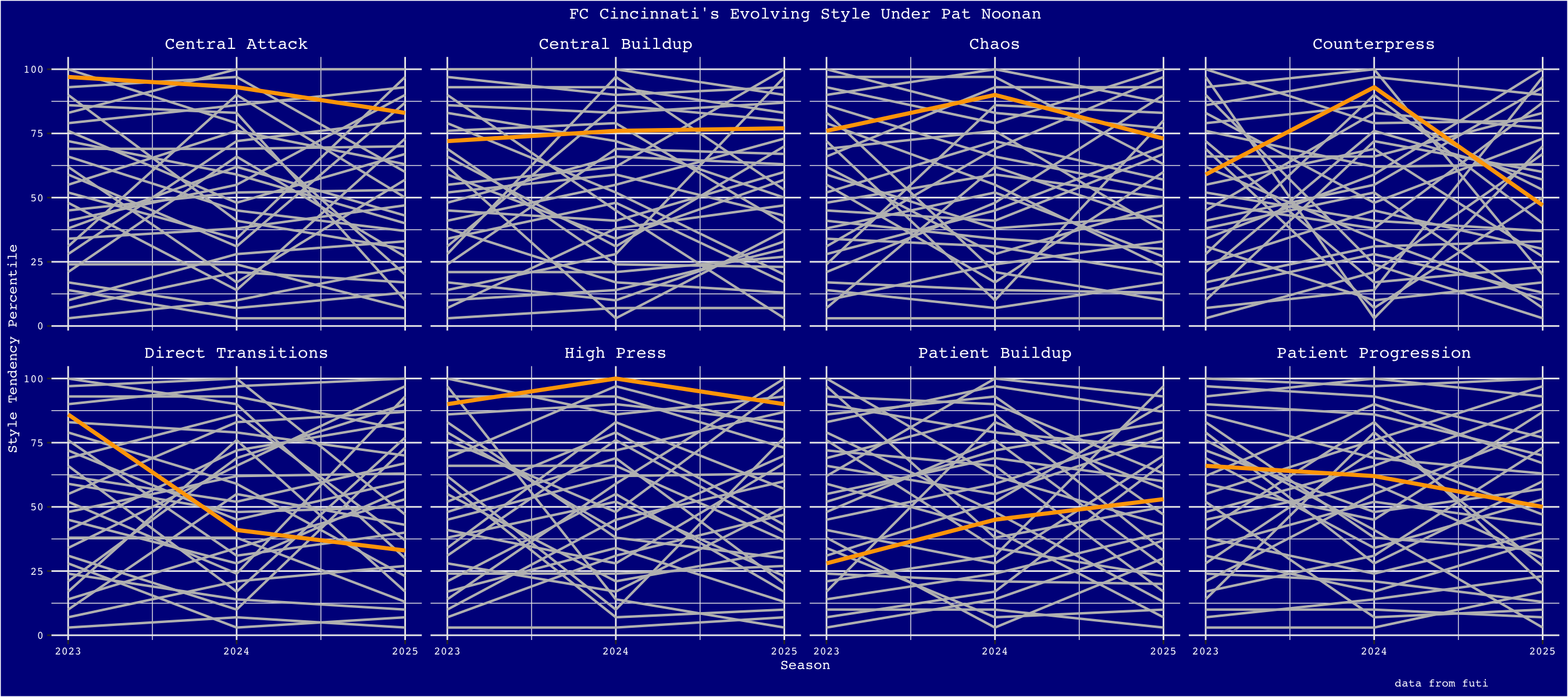
We saw direct play make a return on Saturday and it started from the back. Roman Celentano looked long rather than playing short, which we saw a lot of last year. The team's center backs by passed midfield pressure by passing over it. Per Fotmob, the Orange and Blue attempted 57 long passes, completing 37. Ayoub Jabbari offers a forward aerial target that FCC has lacked since Brandon Vazquez left.
A quick transition, but not a long pass, led to Kévin Denkey's opening goal on Saturday.
Man this was just a superb team counterattack goal from Cincy here.
— Matthew Doyle (@mattdoyle.bsky.social) 2026-02-22T17:07:06.471Z
After receiving a headed pass from Dado Valenzuela, Samuel Gidi played a perfect pass into the space in front of Ender Echenique, who had trailed Atlanta's failed attack, and ended up with space to exploit after the turnover. His pace and dribbling ability pushed the ball up the field and Echenique found Denkey in the box in an extremely dangerous position.
After the game, Noonan said about Echenique's positioning, "Sometimes it's how we want to position him to open space for players ahead of the ball, sometimes it's to keep him higher to be that threat and to make teams think about what he can do if he's able to find the space behind, so it's just how we utilize him."
Putting a structure in place to maximize the number of times Echenique gets to run full speed at defenders or into space seems like a good thing to focus on, and it's a situation that could happen from more moving quickly up the field in possession.
Now we'll wait and see if this more direct game plan was a one-off or if Noonan and his coaching staff are intent on turning the clock back to 2023.
2: Wing Backs' Burden
Much of FCC's offensive success in 2026 depends on the play of the team's wing backs. So, it was fitting that the team's two wing backs notched primary assists on the team's first two goals of the campaign.
We already covered Echenique's impact, and how dangerous he can be in space. Bryan Ramírez made his MLS debut on the opposite side of the field. Both players were heavily involved in possession, especially in the attacking half of the field.
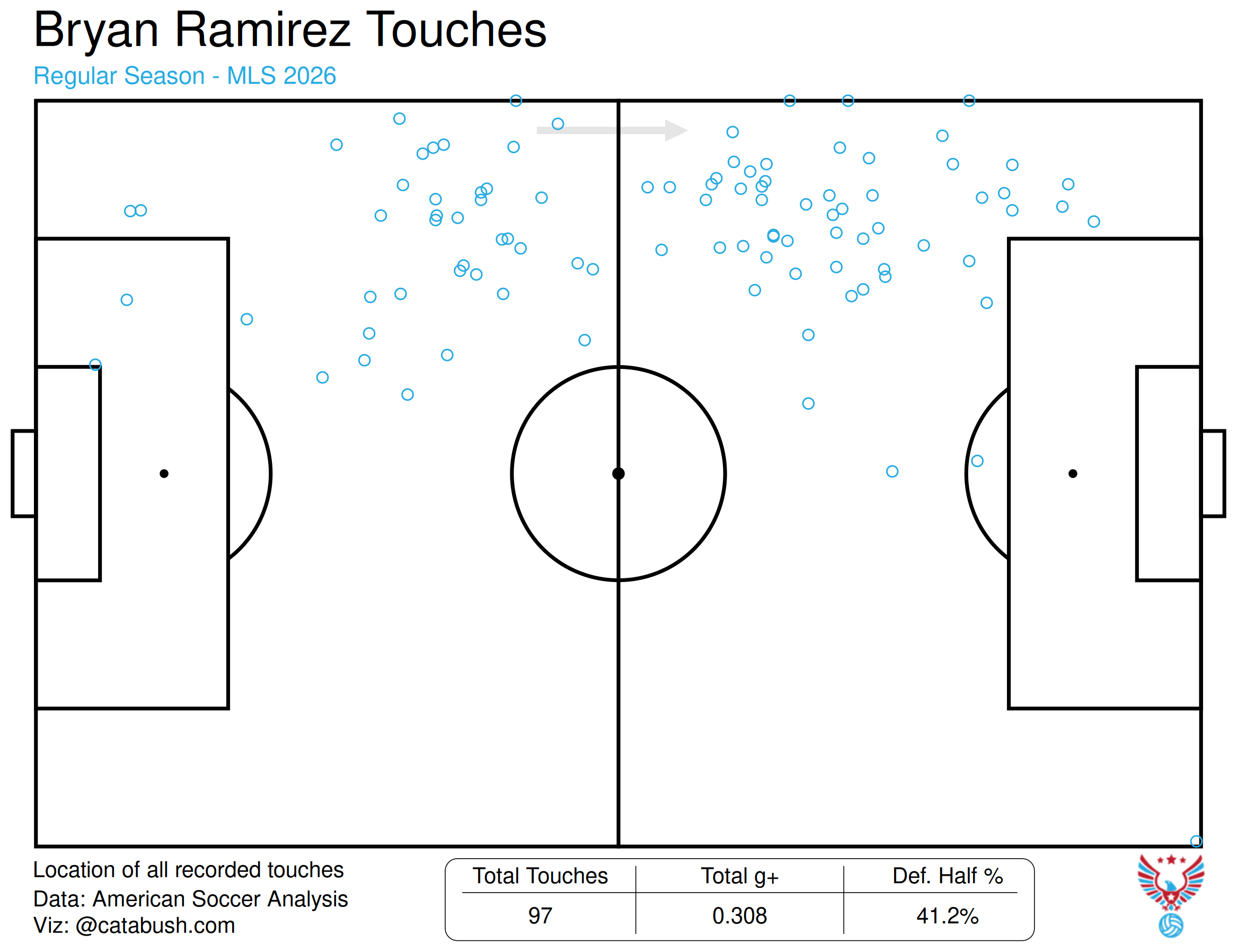
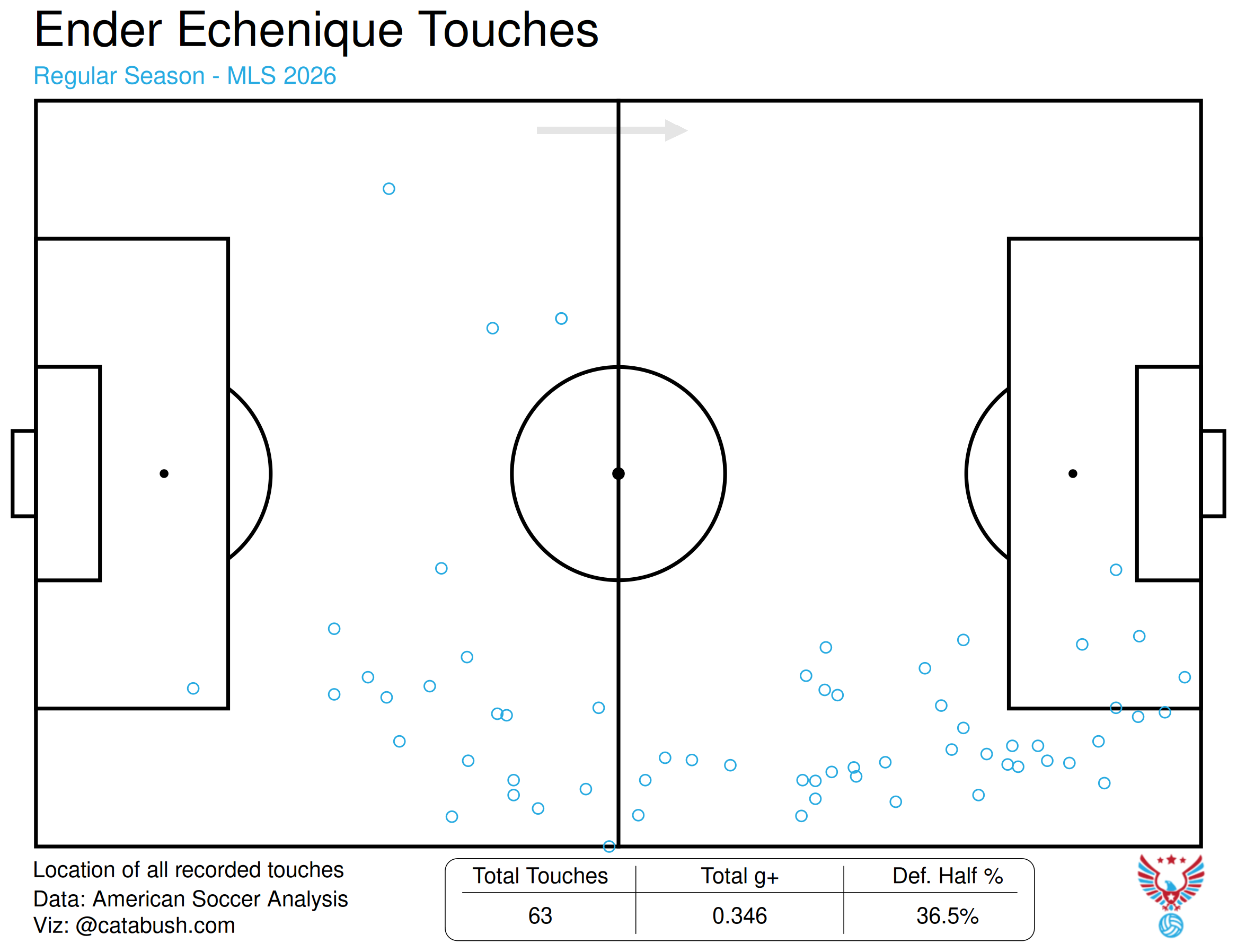
Ramirez's impact was a little more mixed. He was a reliable option to receive passes and added some ball progression. However, Ramirez didn't capitalize on his opportunities to deliver effective passes into the box until he dropped his corner kick on Nick Hagglund's head in the 90th minute. Still, he was an effective counterweight on the left to Echenique.
There's still more we need to see from the Orange and Blue's wing backs before determining that Albright got it right this year but Saturday was certainly a good start.
3: Set Pieces
I wrote last week that we'd have a pretty good idea about if things were actually going to change vis a vis set pieces early in the season. Hagglund's goal is an easy thing to point at to argue that the team is, in fact, changing its approach.
More importantly to me, FCC also attempted two long throw-ins into the box (unless I missed one), one from Hagglund and one from Gilberto Flores. Nothing came of either but it's a good sign that the team is willing to maximize opportunities in the final third.
Again, we'll continue to see how if the emphasis remains but continuing to create chances and goals from set pieces would be a needle mover in 2026.


