
11 Things I'll Be Watching For In 2026

With that out of the way, somehow, the 2026 season is already here. I’ve written some variation of this post for the past few years both here and previously at Cincinnati Soccer Talk and I’ve found it be helpful in my own preparation for the season because it makes me think about both the big questions but also the smaller ones. Obviously, this list is not in order though some match up with the associated numbers (some more than others), so please forgive me in advance.
This offseason wasn’t as busy, in both good and bad ways, as last year. However, that relative quiet doesn’t mean there aren’t significant questions about the team. So without further ado, here are 11 things I’ll be watching for in 2026:
5: Year Refresh
General Manager Chris Albright opened his first post-season media availability late last year framing this off-season as an opportunity for a refresh. He said, “there’s been a lot of high level conversations about refreshing things in year five and being really strategic and analytical as we go into ‘26 and have clear targets, markers, goals that drive and inform a lot of what we do, as far as personnel and formation and style of play.” He continued, “we have, you know, the most points over the last three years. That’s a lot to be proud of for a lot of people in this building. But I think that’s also the best time to maybe make some to look at making some changes.”
The next time he talked to media, Albright clarified, “When we talk about the refresh, it’s strategic in staffing, how we train, you know, you’ll see some of our scheduling is different. So we thought about a lot of things this offseason to try to maximize the group to be able to win.”
With the Orange and Blue’s first competitive fixture taking place tomorrow(!), from the outside, the refresh is much closer to Albright’s later definition. The few roster moves don’t indicate any major structural changes. With a few exceptions (some of which could really move the needle!), FCC is running back essentially the same team from 2025.
Well, you might say, why not run it back, that team finished second in the Supporter’s Shield? My own opinion that the team’s success in 2025 was unsustainable due in part to opponents missing shots and Evander’s generational heater from outside the box is well documented.
The question becomes, is the roster, as currently constructed, good enough to challenge near the top of the league again with just Albright’s more limited refresh? There are certainly some tactical tweaks we could see that could make a difference. As you get further down this list, you’ll read a lot about how much relies on the team’s wing backs being more dangerous with the ball. That’s nothing new for this era of FCC soccer. But the 2025 team was flashing warning signs, even if the results weren’t all that impacted.
So one of my biggest questions going into 2026 is whether the team is good enough to compete for silverware with a limited refresh or if this is something we’ll be talking about next offseason, or are we talking about a rebuild instead?
3: xG
A major theme of the offseason discourse among FCC fans, and Albright’s first press conference, was about the team’s struggles playing attacking soccer. Albright publicly acknowledging those issues is one thing, but what was noteworthy (to me, at least) was how he talked about the subject. By my count, he mentioned expected goals three times during his more than 30 minute December press conference. At one point, Albright said, “we’re sort of pointing to maybe driving towards expected goals next year and having that be a goal.”
Using xG as a measure of attacking output isn’t perfect but it’s better than just about every public alternative, both as a descriptor and as a predictor, especially with a full season of data.
That xG has become a lightning rod in soccer discourse doesn’t help. If you’ve read this newsletter before, you know where I stand. However, the goal of raising a team’s xG is something that every fan should agree is a good thing because it all it means is taking more shots from dangerous parts of the field. That’s something that everyone who watched the Orange and Blue last year should be able to agree that the team didn’t do nearly enough of. The Orange and Blue’s 48.95 xG ranked 17th in Major League Soccer according to American Soccer Analysis data, certainly out of step with what you’d expect from a team with the second highest points total in the league.
At this point, Albright’s vision for how to improve the team’s attacking output is nebulous outside of one major personnel move that should make a pretty big difference (more on that later). New assistant coach Brett Uttley joined Noonan’s staff, filling the role Albright described as, “someone that in line with sort of all the high level conversations we’ve had in terms of driving expected goals, being more analytical, taking what we have in the back of house and what already exists here, and kind of how we recruit, and flowing that into the coaches room a little bit more, and allowing that to hopefully show up on Saturday more often.”
It’s one thing to talk about improving xG because it’s become so present in the soccer conversation, it’s another to fully recenter the teams’ focus on being more dangerous going forward. Without seeing what the team looks like in preseason, it’s impossible to say if this supposedly more analytically driven approach is paying dividends on the field. We’ll find out soon enough.
4: Will More Wing Back Production Lift All Boats?
The Orange and Blue misevaluated its wing backs in 2025, there’s no way around it. Don’t get me wrong, I think Lukas Engel and DeAndre Yedlin are good individual players, but together they weren’t good fits for what FCC has come to rely on from the position.
The team started to address the issue in the summer window last year with the acquisition of Ender Echenique. He flashed explosiveness on the ball and provided a much needed outlet in the final third even if he struggled to find the final ball to teammates.
Bryan Ramirez, who arrives from LDU Quito in Ecuador, is supposed to be the final puzzle piece. At first glance, he’s somewhat of a middle ground between FCC’s latest wing back recruits in that he’s actually played the position some but is also an attacker first and foremost. Even compared with wingers in Ecuador Liga Pro, Ramirez held his own in 2025.
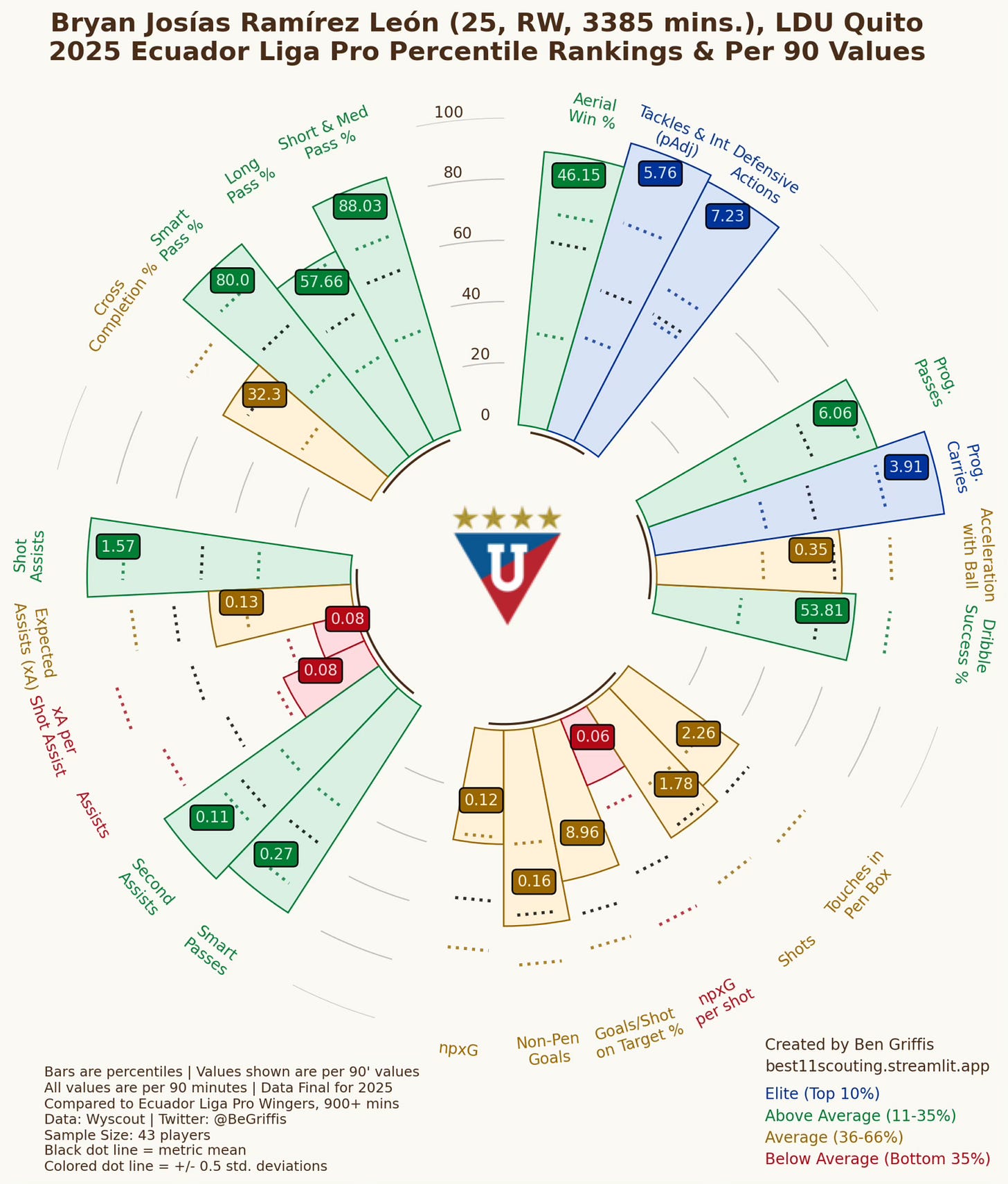
Viable attacking width on both sides of the field should make a huge difference for FCC. For much of last season, Yedlin and Engel didn’t provide enough of a threat to stretch opposing defenses horizontally, allowing defenses to clog up the the middle of the field, making already small passing windows even tighter.
From the outside, much of the Orange and Blue’s success in 2026 depends on if these wing backs meaningfully move the needle, as you’ll see as you move down this list. We’ll have a pretty good idea if they’re up to the task soon enough.
9: Denkey’s Encore
If the goal of the offseason is to generate more xG, the biggest beneficiary should be the team’s best striker: Kévin Denkey.
His first season in Orange and Blue was solid enough - 16 goals certainly isn’t nothing - but too often he was isolated in attack. Put another way, very little was easy for Denkey.
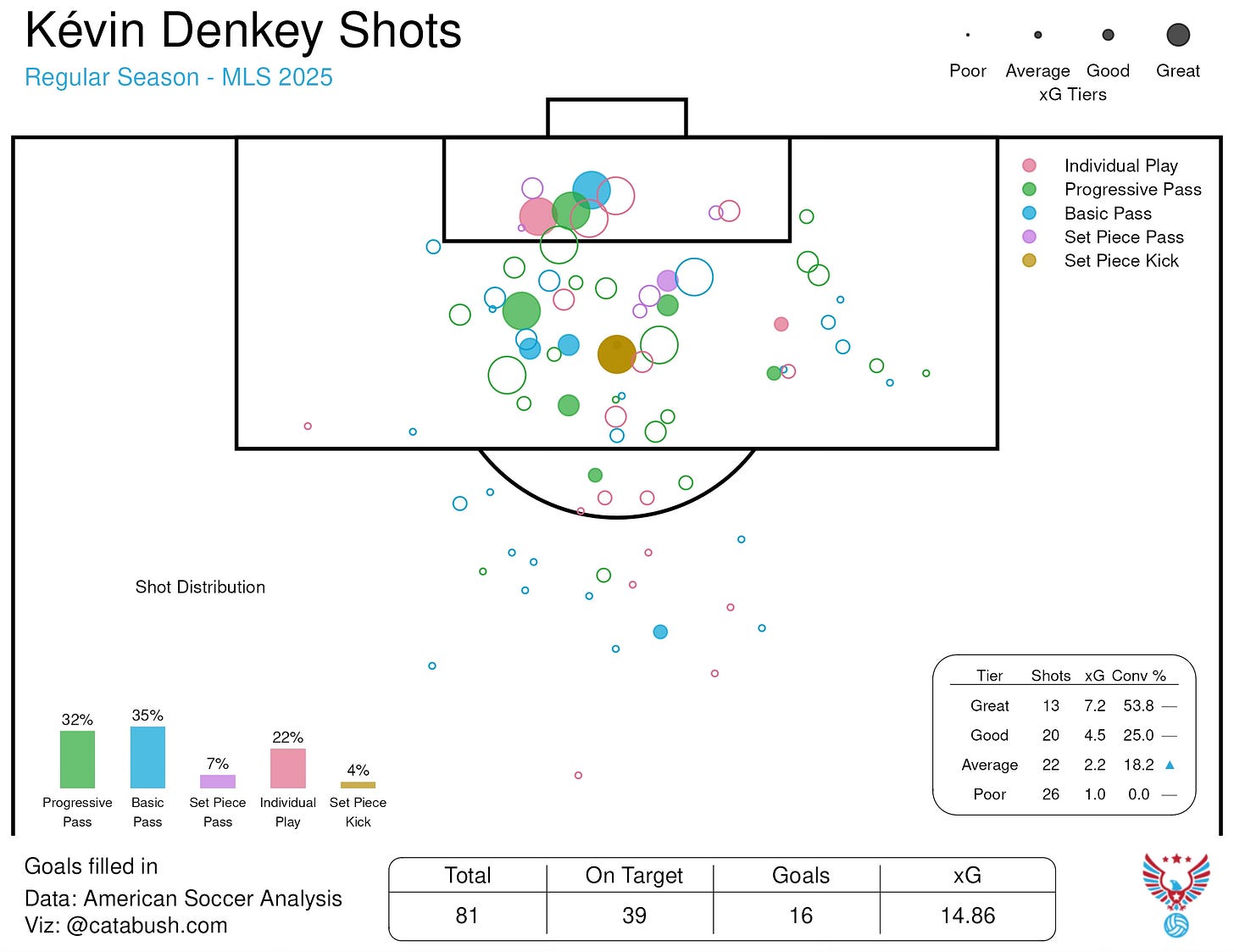
More danger generated by the team’s wing backs should help Denkey, as he’d be the biggest beneficiary from more cutbacks and whipped crosses from wide. Assuming there are no formation changes, Denkey should also benefit from a full season playing next to another striker who can take on more of the hold up duties in ball progression, allowing him to attack open space more often.
The optimistic take is that these structural changes, plus just having a full year of experience in MLS, should prime Denkey for a massive second season in Cincinnati.
10: Making It Easier On Evander
Denkey isn’t the only player the Orange and Blue need to put in better positions to succeed. Too often in 2025 Evander had to do something spectacular for FCC to get a result. And unfortunately, is goal scoring output in 2025 is probably not going to happen again, at least not in the same way.
Getting the most out of Evander should mean taking things off his plate. One straightforward example: if the team can more consistently move the ball up the field, Evander won’t consistently have to drop so deep, allowing him to be the one receiving the ball in the final third rather than the one moving it there.
He’s capable of the spectacular but that level shouldn’t be required every game. It’s okay to make things easier for your players, too. I’ll watching to see if the FCC can get the ball to Evander in the final third consistently; that should be an omen of good things to come.
11. Set Pieces
Set pieces are taking over soccer. FCC is at least saying the right things about keeping up, advertising for a set piece coach in the offseason. There’s plenty to debate about whether this emphasis on set pieces is good or bad for the game. However, the rules are what they are now and the competitive advantage provided by set pieces can’t be ignored.
It’ll be pretty easy to see how seriously the Orange and Blue is taking set pieces in the first few games. Is the team:
- Taking long throws into the opposing box,
- Aiming corner deliveries at a “meat wall” on the six-yard box,
- Not taking short corners,
- Launching from the Dyche Zone.
If the answer to the all (or at least most ) of the above is yes, then we’ll know the Orange and Blue are looking to maximize the value of set pieces in 2026.
7: Will The Defense Improve?
Lost in much of the offseason conversation about scoring more goals overlooks a serious issue in 2026: FCC conceded a lot of chances to its opponents.
ICYMI: What Went Wrong Without The Ball In 2025
The team got away with it, over and over again, but there’s no reason to think that’s sustainable going into this season. By expected goals allowed, the Orange and Blue went from being one of the best in 2024 to below average in 2025.
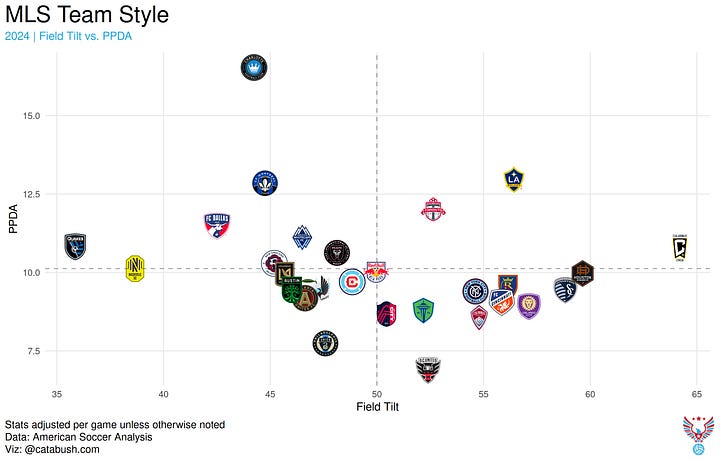
There are some pretty straightforward explanations for at least some of those issues. Opponents had the ball in FCC’s defensive third a lot more in 2025 than in 2024 and the Orange and Blue’s press dialed back in intensity. These aren’t the only issues but are pieces that match up between the eye test and the data.
So much of FCC’s offensive improvement seems to hinge on specific solutions, namely more attacking production from the team’s wing backs. Solving the defensive issues doesn’t have the simplicity of that answer. Questions that I’ll be watching closely as the season kicks off:
- When does Matt Miazga return and what level is he playing at?
- Can Obinna Nwobodo still be an elite destroyer in central midfield?
- Can Echenique and Ramirez hold up as defenders?
- How and how often does the team look to press?
If the team is better with the ball, some of its defensive issues should be negated simply because the other team would have fewer opportunities in possession.
Still, don’t forget about what happens without the ball when assessing the early part of the season.
1. Can Roman Keep Improving?
Roman Celentano was a solid shot stopper in 2025, papering over some of the cracks in FCC’s defense. There are other areas in his game where he could take a step forward, however.
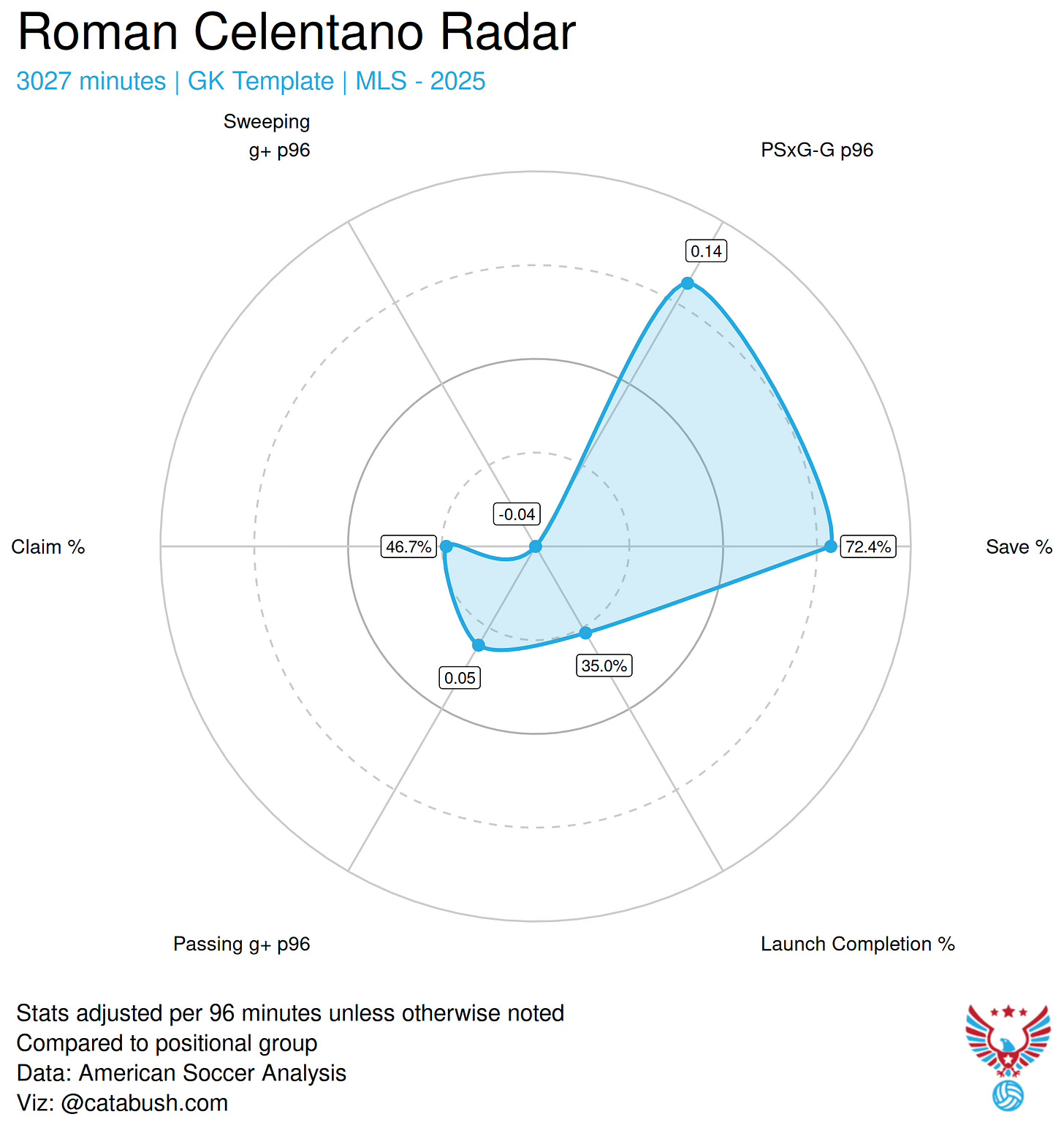
Even if FCC sorts out its defensive issues, if Celentano were to become more comfortable coming off his line and sweeping or claiming crosses, he’d have an even bigger impact in 2026.
8: Bucha
There’s not much to really say about Pavel Bucha that I haven’t written previously. He remains a unique profile in FCC’s midfield and, once again, enters the season without a clear backup on the roster. His health remains of paramount importance to the team’s success as there’s really no one behind him on the depth chart who can fill the same role. I’m including him on this list because he indispensable to the team but also because he’s one of my favorite players on the roster to watch every week.
6: Gidi Or Obi
FCC needs more out of whoever partners with Bucha in midfield assuming the team continues to play with three center backs. With an extra body behind the midfield and the attacking requirements of the team’s wing backs, FCC’s midfield pair has to cover more ground and deal with situations where they’re outnumbered.
Who starts next to Bucha will be worth watching. Samuel Gidi impressed in limited minutes in the final quarter of the season but is still relatively limited with the ball. Obinna Nwobodo has struggled to stay on the field, and whether it’s a tactical instruction or a limitation, he’s rarely been a consistent ball progression outlet.
As Noonan and company look for ways to make things easier for FCC’s best players, just a little bit more ball progression from whoever is playing alongside Bucha would help quite a bit.
2(2): Dado’s Role
Dado Valenzuela’s goal and chance production in 2025 was indisputable. However, his fit into FCC’s best XI is less clear. At this point, Valenzuela seems to be more of a striker than an attacking midfielder as is clear in the data.
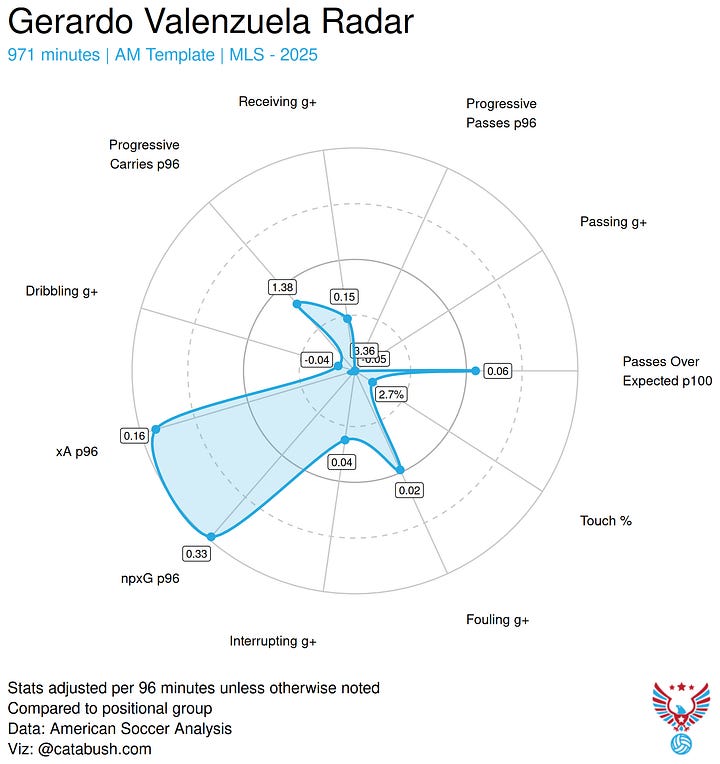
However, he’s not really an attacking midfielder at this point. He doesn’t move the ball the up the field, either passing to teammates or dribbling it. As a potential partner to Denkey, Valenzuela doesn’t provide the same hold up ability as some players already on the roster like Ayoub Jabbari or the ball progression that Brenner did last year.
Where Dado fits in on the depth chart will be worth watching early in the season because, at this point, his best spot might be as a substitute for Denkey.


